
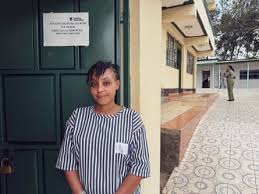
In Kenya’s Lang’ata Women’s Prison, a place known more for hardened sentences than second chances, an inmate once condemned to death has rewritten her story in a way few could have imagined. Ruth Kamande, serving a life sentence for the 2015 killing of her boyfriend, has emerged as one of the country’s most talked-about jailhouse lawyers, a transformation that has attracted national attention, stirred debate around prison reform, and inspired conversations about what justice and rehabilitation can look like behind bars.
Kamande’s journey into the legal world began from a place of frustration rather than ambition. After her arrest and subsequent conviction, she found herself unable to fully understand the legal processes that had shaped her fate. The courtroom felt overwhelming, the proceedings distant, and the law itself like a system she was expected to navigate without real comprehension or guidance. At the time, she did not have the resources to hire a private lawyer, and like many inmates across Kenya, she faced the justice system with limited support. It was this sense of helplessness that pushed her toward seeking knowledge and ultimately toward an entirely new calling.
Inside the prison, she encountered a legal-education program run by a justice-focused NGO known for training inmates and prison staff as paralegals. What started as a simple information session became the turning point in her life. She enrolled in the paralegal training partly to understand her own case better, but as classes progressed, she began to see a bigger picture.
She was surrounded by women whose stories rarely made it beyond the prison gates — women held on petty charges, women unable to afford representation, women who had never once spoken to a lawyer. Many were victims of circumstance, poverty, or systemic neglect, and Kamande realised that legal knowledge wasn’t just a tool for herself; it was a possible lifeline for everyone around her.
Her interest quickly deepened, and she eventually registered for a distance-learning law degree with the University of London. Studying law from a prison environment required an unusual level of discipline. There were no libraries, no traditional study groups, no personal laptops, and no late-night study cafés. Instead, she relied on printed materials, supervised coursework, and limited research access provided by the prison program. Even so, she excelled beyond expectations. During her graduation ceremony in 2024, held virtually and facilitated from within the prison infrastructure, she was named valedictorian, an accomplishment that drew widespread attention across Kenya’s legal and correctional sectors.
But the degree was never just a personal achievement. Back in Lang’ata, Kamande quickly transformed into a valuable resource for fellow inmates. She wrote bail applications, drafted appeals, explained court procedures, and helped women understand their rights – services most of them could not afford on the outside, much less from within prison walls.
Kenya’s prisons, especially female institutions, often house detainees who have been waiting months or even years for trial due to heavy case backlogs. Many do not have legal representation, and some are jailed for minor offences that could have been resolved much earlier with proper guidance. The presence of an inmate with legal training therefore became more than a symbolic victory; it provided practical relief for dozens of women in dire situations.
Though her legal journey earned her respect both inside and outside the prison system, Kamande has consistently acknowledged the seriousness of her crime. She has spoken about feeling threatened during the events that led to the stabbing but also openly admits that taking a life was wrong and irreversible. Her expressions of remorse, shared both with authorities and with the victim’s family, reflect a deeper personal reckoning. In her reflections, she has emphasised that education did not erase her past but helped her understand it differently and helped her grow into someone committed to preventing injustice where possible.

Her transformation also highlights a growing shift in Kenya’s correctional approach. In recent years, there has been increasing emphasis on rehabilitation, skills training, and reintegration. Several inmates across the country have pursued formal education while serving long sentences, with some even completing law degrees similar to Kamande’s. These developments have been supported by NGOs and, increasingly, by prison administrations that see the value in turning incarceration into an opportunity for growth rather than a final destination.
Kamande’s case has re-ignited dialogue around the purpose of life sentences and the possibility of redemption. While she still remains incarcerated, her work has created ripple effects across the justice system. Some of the inmates she has assisted have secured bail after long periods of pretrial detention. Others have won appeals or had their sentences reconsidered. For many, she is the first person who ever explained legal documents to them in simple language. And for the prison system itself, she has become a living example of how education can redirect lives even within the strictest confines.
Her advocacy now goes beyond individual cases. She has spoken about the need for clearer parole systems, arguing that life sentences in Kenya are often ambiguous and lack consistent review procedures. She believes that prisoners who demonstrate genuine rehabilitation, academic achievement, or community contribution deserve an opportunity to be considered for release. These views, while not universally accepted, are contributing to broader discussions about reforming Kenya’s penal code and improving its overcrowded prisons.
The wider public reaction to her transformation has been mixed, as is often the case in stories involving serious crimes. Some see her accomplishments as an inspiring testament to the power of second chances and the importance of rehabilitation. Others argue that education and public recognition should not overshadow the gravity of the offence that led her to prison in the first place. Yet, despite differing opinions, there is widespread agreement that her story is extraordinary — a rare example of someone turning one of the harshest sentences possible into a platform for meaningful change.
Today, from within one of Kenya’s most prominent correctional facilities, Kamande continues her work as an inmate-lawyer, offering legal guidance to women who might otherwise be forgotten by the justice system. Her life is still defined in part by her conviction, but increasingly, it is also defined by her contributions: her legal knowledge, her service to others, her commitment to reform, and her belief that learning can reshape even the most difficult circumstances.
Her story raises questions that go far beyond the walls of Lang’ata Prison. What does justice truly mean? Can people change? And should prison be a dead end or a turning point? For Kenya, and for observers across Africa, the rise of its jailhouse lawyer is a powerful reminder that even in places built for punishment, transformation is still possible.