The Eurovision Song Contest, long celebrated as Europe’s largest stage for cultural unity, is facing one of its most turbulent moments in recent history as several participating countries announce a boycott of the 2026 edition. Their withdrawal is linked directly to Israel’s continued involvement in the competition amid escalating international concerns about the humanitarian situation in Gaza.
The boycott gained momentum shortly after the European Broadcasting Union (EBU) confirmed that Israel would not be excluded from next year’s contest in Vienna. Instead, the EBU opted for a set of new neutrality and voting reforms, a decision that prompted swift criticism from some member broadcasters. Within hours, publicly funded broadcasters in Ireland, Spain, the Netherlands, and Slovenia declared they would not participate in the 2026 show.
Their announcements have triggered significant debate across Europe and beyond, raising questions about whether Eurovision can maintain the delicate balance between being an apolitical cultural event and reflecting the moral expectations of its participating nations.
A Crisis Shaped by the Gaza Conflict
The primary reason cited by the withdrawing countries is the ongoing conflict in Gaza and the mounting civilian casualties. Broadcasters from the four boycotting nations argued that continuing to share the Eurovision stage with Israel during an active conflict, one that has drawn widespread condemnation and international scrutiny, goes against the spirit of unity and human dignity the event claims to champion.
In Ireland, the state broadcaster described participation as “incompatible with the values we publicly uphold,” pointing specifically to the humanitarian crisis and the escalating death toll. Spain’s broadcaster expressed similar concerns, stating that joining the contest under these circumstances would amount to overlooking the suffering of civilians.
The Netherlands and Slovenia also voiced strong objections, with Slovenia stating plainly that it could not participate in an event that refused to take a moral stand on what it described as “the devastating impact of the conflict on innocent children and families.”
These decisions underscore a broader shift taking place across Europe, where public broadcasters are increasingly pressured by citizens, advocacy groups, and artists to align their cultural decisions with humanitarian principles.
Political Interference and Voting Integrity Concerns
While humanitarian concerns dominate public statements, another layer of dissatisfaction focuses on accusations of political interference and voting manipulation. Critics argue that, over the years, external pressures and alleged efforts by political actors to influence voting patterns, especially when conflicts arise, have undermined trust in the contest’s neutrality.
The EBU acknowledged that concerns existed and introduced certain reforms, including adjustments to jury composition and new rules limiting external influence on the voting process. However, these measures were deemed inadequate by the broadcasters who have chosen to withdraw. They argue that the reforms do not address what they see as a deeper structural problem: that the contest cannot claim to be apolitical while allowing countries central to major geopolitical conflicts to participate without consequence.
Some broadcasters also questioned whether the EBU’s decision not to allow a direct vote on Israel’s participation represented a reluctance to confront difficult political realities. Instead of debating the matter openly, the EBU pushed for neutrality guidelines meant to pacify both sides, a move that ultimately satisfied neither.
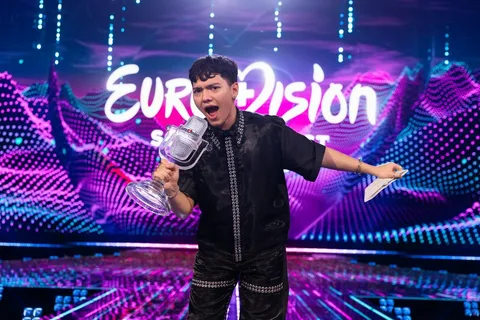
EBU’s Stance
The EBU has repeatedly stated that Eurovision was designed as a unifying cultural event, one intentionally insulated from political disputes. From its inception in the aftermath of World War II, the contest has positioned itself as a space for dialogue through music rather than a platform for geopolitical expression.
EBU officials insist that removing any country on political grounds would set a dangerous precedent and fracture the contest’s mission of inclusivity. They maintain that the role of Eurovision is not to pass judgment on governments or their policies but to provide a stage where artists from diverse backgrounds can perform for a global audience.
European governments are also divided. Some, like Germany and the host nation Austria, have strongly criticized the idea of a boycott, arguing that isolating any country contradicts the very purpose of Eurovision. They insist that cultural cooperation should persist even in moments of political tension and that excluding participants based on conflicts would threaten the event’s long-standing foundation.
Despite the EBU’s insistence on neutrality, the upcoming Eurovision is now marked by deep division. Countries withdrawing from the contest are not insignificant players, Ireland is one of Eurovision’s most historically successful participants, holding seven victories. Spain and the Netherlands are influential cultural contributors. Their absence threatens to weaken both the diversity and the competitive energy of the show.
Broadcasters from other countries, including some in Scandinavia, have indicated that they are under pressure to join the boycott but have not yet confirmed their decisions. The tension has placed the EBU in a difficult position: if more countries withdraw, the reputation and financial viability of the contest may be jeopardized.
It is an ironic situation, Eurovision was envisioned as a symbol of unity, yet the 2026 edition risks becoming the most politically fractured in decades.
A History of Politics in a Supposedly Apolitical Contest
Eurovision has never entirely escaped political undercurrents. Despite official rules banning political messages, performances and voting patterns often reflect regional alliances, international disputes, and public sentiment.
In past decades, political dramas shaped the contest in subtle ways, but recent years have been more overt. Russia’s exclusion following the 2022 invasion of Ukraine marked a significant departure from Eurovision’s apolitical aspirations. Many broadcasters now argue that this set a precedent for taking moral stances, making the refusal to suspend Israel appear inconsistent.
These dynamics have intensified public debates about what Eurovision should be: an untouched cultural showcase, or a symbolic global platform that must adapt to modern expectations of ethical responsibility.
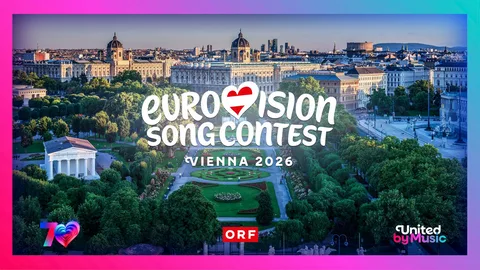
With the 2026 contest scheduled for Vienna, organisers face immense pressure to deliver a show that can withstand unprecedented scrutiny. The host country is preparing to proceed with the competition as planned, but the absence of key participants will undoubtedly alter the overall atmosphere.
Financial implications remain unclear. Eurovision relies heavily on wide participation and robust viewership, both of which could be affected by the boycott. The long-term relationship between broadcasters and the EBU may also suffer, especially if trust continues to erode.
The deeper question emerging from this crisis is whether Eurovision can continue to operate under a model that insists on neutrality while the political realities of the world seep inevitably into its structure.
As Eurovision prepares for what may be one of its most divisive editions, the core issue extends beyond a single country or conflict. It touches on the identity of the contest itself and the expectations of the millions who watch it each year.
Can Eurovision remain a beacon of cultural unity while navigating geopolitical turmoil? Or must it evolve, acknowledging that in today’s world, even entertainment cannot be separated from global events?
For now, Europe watches closely. The music will go on in Vienna, but the discord surrounding Eurovision 2026 may echo long after the final note is sung.