China Eastern Airlines has unveiled what is now being recognised as the world’s longest one-way commercial flight, linking Shanghai and Buenos Aires in a single continuous service that only pauses for a technical stop in Auckland. The new route, nearly 20,000 kilometres across three continents, represents a major shift in global aviation, offering travellers a faster, more efficient path between East Asia and South America. With this launch, the airline has effectively created a new southern corridor, reducing traditional China–South America travel time by more than four hours and rewriting expectations for ultra-long-haul air travel.
The inaugural flight departed Shanghai Pudong International Airport in the early hours of Thursday morning, filled to near capacity with passengers ranging from business travellers to aviation enthusiasts eager to experience a route that had been teased for months. As the aircraft pushed back and began the first leg of its journey, it was carrying not just passengers, but also symbolic weight: the promise of a more connected global south and the closing of one of the longest remaining gaps in intercontinental travel.
For decades, passengers travelling between China and South America had few convenient options. Most flights are routed through major hubs in Europe, North America, or the Middle East, adding hours of travel time and often requiring multiple transits. A typical itinerary between Shanghai and Buenos Aires could last between 28 and 30 hours, depending on the routing. China Eastern’s new route cuts that significantly, with total travel time now averaging around 25 to 26 hours southbound. Even the return journey, which naturally takes longer due to headwinds and scheduling considerations, is reported to clock in under 30 hours, still a major improvement over older itineraries.
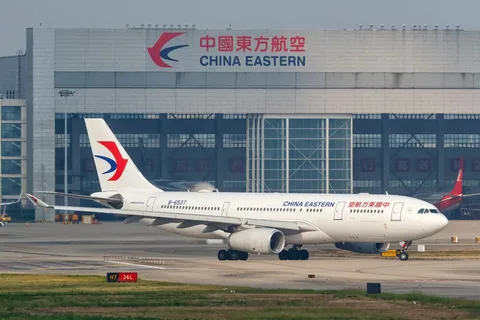
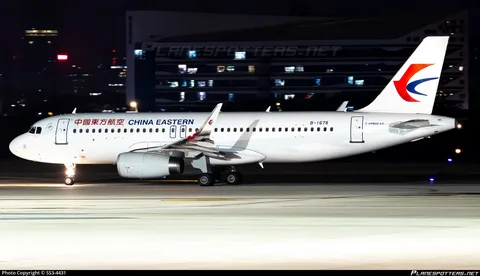
The new service operates with a Boeing 777-300ER, an aircraft long respected for its range, capacity, and reliability on demanding ultra-long-haul missions. While the flight includes a brief stop in Auckland for refuelling and technical checks, passengers remain on board, eliminating the need for disembarkation and airport navigation during the journey. This “direct through-service” approach streamlines the experience, reducing interruptions and preserving a feeling of continuity throughout the flight.
The launch also marks the establishment of the first direct air connection between China and Argentina. The significance of that milestone extends far beyond aviation metrics. With growing economic ties, tourism exchanges, and cultural collaborations between the two countries, a direct air bridge is poised to make mobility smoother for businesses, students, families, and leisure travellers. The route also gives Argentina and neighbouring South American countries faster access to Asian markets, particularly for perishable goods such as fresh produce and seafood that can benefit immensely from shorter transit times. Return flights are already being prepared to carry products like cherries and chilled salmon, underscoring the commercial value of the new corridor.
What sets this route apart, beyond the record distance, is the strategic thinking behind its southern trajectory. Instead of following traditional northern routes, which require navigating crowded airspaces and longer detours, China Eastern charted a path across the Pacific and down through Oceania. This shift opens a new aviation lane between the eastern hemisphere and South America, one that experts believe could become a model for future ultra-long-haul operations. Airlines around the world are continuously exploring new ways to optimise range, fuel efficiency, and passenger comfort, and Southern Hemisphere routing may well become an increasingly competitive option as aircraft technology evolves.
Furthermore, Auckland stands to benefit as more than just a technical waypoint. The airport is positioning itself as a strategic link in trans-Pacific travel, and its involvement in this historic flight elevates its role in long-distance aviation networks. For New Zealand, which maintains strong diplomatic and commercial relations with both China and South American nations, the stopover reflects a strengthening of its own position in global connectivity.
The economic consequences of this new route are expected to unfold gradually but significantly. Faster travel translates into more seamless business operations, more attractive tourism packages, and more dependable logistics pipelines. Companies in sectors such as agriculture, mining, manufacturing, and education, all of which maintain strong ties between China and South America, will be able to move talent and goods with far greater efficiency. Airlines and travel analysts anticipate an uptick in bilateral visits, tourism flows, and seasonal travel, particularly during South America’s fruit export seasons and major holiday periods in China.
Diplomatically, the flight symbolises an expanding relationship between China and Latin America. Air connectivity has long been seen as an indicator of economic intent and political goodwill. By creating a high-capacity, cross-continental link, China Eastern is helping to foster deeper people-to-people interactions, cultural exchanges, and the kind of long-term familiarity that strengthens cooperation at multiple levels. The airline has already entered into partnerships with regional carriers to coordinate routes and improve transfer experiences, signalling that this launch is part of a broader strategy rather than an isolated addition to its schedule.
The experience for passengers aboard this ultra-long flight is designed to reflect the magnitude of the journey. With cabin attendants trained for extended service cycles, a broader range of in-flight meals, and scheduled rest periods optimised for the multi-segment journey, the airline aims to make the marathon flight more comfortable than one might expect from its duration. Early passengers have praised the spacious cabin layout, consistent in-flight entertainment availability, and coordinated lighting and meal timings intended to ease jet lag across hemispheres.
As the aviation industry pushes deeper into an era defined by ultra-long-haul capability, routes like this set new benchmarks. Global travel is slowly shifting away from multi-stop pathways toward more seamless, continent-spanning journeys. China Eastern’s Shanghai–Auckland–Buenos Aires route demonstrates that the world’s most distant cities are becoming more accessible than ever before. The achievement highlights the possibilities unlocked by modern aircraft efficiency and by new strategic thinking about airspace and routing.
In the broader narrative of global mobility, this milestone is likely to be remembered not just for its sheer length but for what it represents: a shrinking world, faster connections, and a new chapter in intercontinental cooperation. For travellers heading between China and South America, the days of long, fractured itineraries are finally giving way to something smoother and much more direct, a transformation that may inspire other carriers to reimagine what is possible across the world’s longest distances.