
In a move that marks one of the most consequential shifts in U.S. immunisation policy in more than thirty years, the Centers for Disease Control and Prevention’s Advisory Committee on Immunisation Practices (ACIP) voted on December 5, 2025, to limit the routine administration of hepatitis B vaccines given at birth. The panel’s decision, approved by an 8–3 vote, rolls back a longstanding recommendation that had advised all infants, regardless of maternal infection status, to receive their first dose within 24 hours of delivery.
If formally accepted by the CDC’s acting director, the new guideline would largely reserve the immediate birth dose for infants born to mothers who test positive for hepatitis B or are deemed at high risk of infection. For infants whose mothers are confirmed negative, the recommendation shifts toward what the committee describes as “shared clinical decision-making,” allowing parents and clinicians to determine whether vaccination should occur later, typically starting at two months of age.
The vote concludes months of public debate, intense medical scrutiny, and policy deliberations, marking a significant departure from the universal approach that has shaped U.S. newborn immunisation since the early 1990s.
A Dramatic Shift from Decades of Universal Protection
The universal hepatitis B birth-dose recommendation was introduced more than three decades ago in response to high transmission rates between mothers and newborns. At the time, many pregnant women were not routinely screened, and the vaccine served as a broad protective measure that prevented countless infections and long-term complications.
Health officials widely credit the policy with helping to reduce childhood hepatitis B cases by more than 90%. It became a routine part of hospital procedures, valued for its reliability and simplicity: no matter the circumstances, every newborn received protection.
The newly approved recommendation represents a philosophical shift away from universalism toward targeted prevention. Members supporting the change argued that the United States now has widespread maternal screening procedures and lower overall infection rates, reducing the need for an automatic vaccine at birth. They also noted that several high-income countries with similarly low hepatitis B prevalence delay vaccination until infancy rather than immediately after birth.
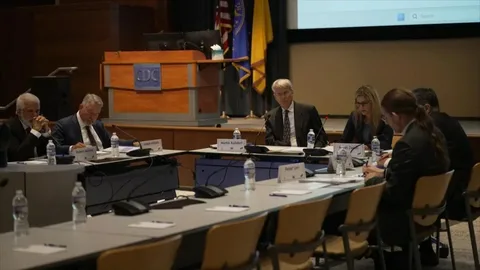
The panel majority emphasised that the goal of the new strategy is not to remove the vaccine from the schedule but to allow more individualised medical decision-making for healthy infants born into low-risk environments.
Medical and Ethical Divisions
Despite the majority vote, the decision exposed deep divisions among public health experts, paediatricians, and infectious disease specialists. Those who opposed the change argued that there was no new scientific evidence to justify removing the universal recommendation and warned that the altered policy could inadvertently increase risk, particularly in cases of missed maternal screenings or testing errors.
Dissenting committee members cautioned that the birth dose has historically acted as a safety net, especially for infants whose mothers received late prenatal care or incomplete testing. They expressed concern that removing this safeguard could lead to preventable infections, some of which may not become evident until years later.
Several medical organisations also voiced strong criticism of the vote, describing the birth dose as one of the simplest and most effective methods to ensure early protection. They argued that shifting to a selective model complicates hospital workflows and could reduce overall vaccination coverage, making it harder to maintain consistent public health protections.
Some experts further warned that the new recommendation may widen disparities. Families with limited access to healthcare or fewer prenatal visits could be disproportionately affected, potentially leaving vulnerable infants unprotected.
Political and Public Reactions Intensify the Debate
The decision quickly drew national attention, extending far beyond medical circles. Members of Congress, particularly those overseeing health committees, expressed alarm that reversing decades of established guidance could undermine childhood vaccination progress at a sensitive time when public trust remains fragile.
Some lawmakers publicly criticised the vote, saying it risks reversing hard-won public health gains. They urged the CDC’s leadership to carefully evaluate the potential consequences before making the policy official.
Public reactions have also been mixed. Some parent advocacy groups welcomed the change as a step toward greater autonomy and flexibility in newborn care. They praised the committee for acknowledging that many infants face minimal risk immediately after birth.
Conversely, public health advocates voiced fears that the shift may amplify confusion among new parents, especially amid rising misinformation about childhood vaccines. They emphasised the importance of clear communication to prevent misunderstandings about what the change does, and does not mean.
What the New Guidance Would Mean for Hospitals and Parents
If the CDC director adopts the committee’s recommendation, hospitals nationwide will need to adjust their protocols. Rather than automatically administering the vaccine shortly after delivery, staff will need to verify maternal hepatitis B status and confirm parental decisions before proceeding.
For high-risk infants, such as those born to mothers who test positive or whose infection status is unknown, the birth dose remains firmly recommended. The vaccine would still be administered urgently to prevent transmission during childbirth.
For low-risk infants, parents would be encouraged to discuss vaccination timing with their healthcare provider. While the vaccine would remain part of the recommended childhood immunisation schedule, the first dose could be postponed until the two-month paediatric visit.
Some paediatricians have expressed concern that delaying the dose may lead to missed vaccinations if families face scheduling challenges or limited access to early-childhood healthcare.
A Turning Point in U.S. Vaccine Policy
The ACIP vote represents more than a simple update to an immunisation schedule; it signals a broader philosophical shift in federal health guidance. For decades, U.S. childhood vaccinations have largely followed universal, standardised policies designed for maximum population-wide impact. The hepatitis B revision introduces a more flexible, individualised model that could influence future debates on vaccine timing and recommendations.
Whether this approach strengthens parental engagement or creates new vulnerabilities remains a central question. What is clear is that the decision will require widespread education efforts — for parents, providers, and policymakers, to ensure the changes are understood and applied safely.
As the nation awaits the CDC director’s final decision, the hepatitis B vote stands as one of the most consequential and controversial public health recommendations in recent years. It has reopened discussions about the balance between individual choice and population-level protection, revealing just how complex vaccine policymaking has become in a shifting medical and political landscape.