
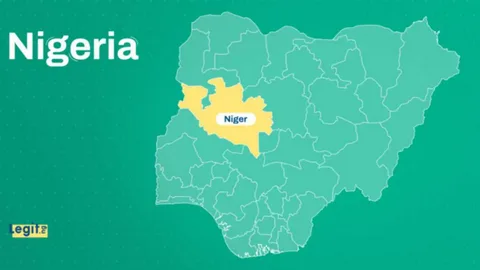
Nigeria has secured the release of at least 100 schoolchildren abducted last week in Niger State, following a coordinated effort involving security agencies, state authorities, and community intermediaries. The children, who had been taken by armed bandits during an early morning raid on their school, were freed late Tuesday after days of negotiations and intensified security pressure across the region.
Their return marks a significant development in the country’s ongoing struggle with mass abductions, a crisis that has plagued northern communities in recent years and drawn national and international concern. While authorities confirmed the rescue, details surrounding the operation remain closely guarded, with officials emphasising the need to protect ongoing security efforts and prevent future attacks.
The incident occurred in the Mariga axis of Niger State, an area that has suffered repeated attacks by armed gangs commonly referred to locally as bandits. According to local officials, the gunmen stormed the school premises shortly after classes began, forcing dozens of children into nearby forested areas before fleeing deeper into remote terrain.
Parents and community leaders initially mobilised in panic, but were cautioned by authorities to allow security agencies to take the lead. The state government quickly announced that military units, police tactical squads, and local vigilante formations had been deployed to track the assailants’ movements.
In the hours following the abduction, national security authorities also became involved, with the Federal Government assuring families that everything possible was being done to locate and recover the children safely.
While early operations focused on tracking the kidnappers, sources familiar with the rescue effort indicated that a dual strategy was adopted: mounting pressure through sustained military presence in the area while simultaneously opening communication channels through trusted community actors.
Officials have not disclosed whether any form of ransom was demanded or paid. Nigeria’s federal and state governments have repeatedly stated that they do not support ransom payments to criminal groups, arguing that it fuels an already dangerous industry of mass kidnappings. However, communities in affected regions have often found themselves caught in the tension between official policy and on-the-ground realities.
In this case, government insiders suggested that negotiations centred on ensuring the children’s safety while discouraging the abductors from splitting the group or relocating them farther into hard-to-access enclaves. Security analysts believe that the heavy concentration of military patrols may have limited the kidnappers’ movement and options, ultimately leading to an agreement for the children’s release.
How the Release Unfolded
The children were freed in batches and later transported to a secure location under the supervision of military personnel and local authorities. Medical teams were on standby to conduct initial health assessments, while counsellors were deployed to help the children begin the process of psychological recovery.
Reports indicate that some of the children appeared weak and traumatised after several days in captivity. However, officials have stated that none of them sustained life-threatening injuries. Parents were invited to a controlled reunion later in the evening, as authorities worked to document each child’s identity and ensure proper handover procedures.
The Governor of Niger State, speaking through a senior aide, described the release as the result of “patience, strategy, and collaborative effort,” adding that the state remains committed to preventing a recurrence. He thanked security agencies for their persistence, and community leaders for serving as intermediaries during a tense and emotionally charged period.
Federal Government’s Reaction
The Federal Government praised the rescue, calling it a reflection of Nigeria’s renewed commitment to addressing insecurity in school environments. A spokesperson from the presidency noted that the incident underscores the need for continuous reinforcement of security architecture, especially in vulnerable rural communities.
While acknowledging that Nigeria has suffered numerous high-profile abductions of schoolchildren over the past decade, the spokesperson stated that the government is implementing measures aimed at reducing the frequency of such attacks. These include improved intelligence gathering, more coordinated military operations, and community engagement programs designed to discourage collaboration with criminal networks.
The Minister of Education also issued a statement, emphasising that the safety of students remains a top priority. The ministry is expected to send a delegation to assess the affected school and advise on long-term protection strategies.

Community Relief and Lingering Fears
In the town where the abduction occurred, relief was mixed with lingering anxiety. Parents expressed gratitude for the safe return of their children, but many also voiced concern about the growing audacity of armed groups and the vulnerability of rural schools.
Shop owners, farmers, and local leaders gathered in small clusters outside the community hall, discussing the ordeal and debating what the future might hold. For many of them, the release brought temporary comfort, but did little to erase the reality that their region has become a target for criminals seeking ransom, attention, or territorial influence.
Some community members have renewed calls for more robust police presence in rural districts, while others advocated for the fortification of school facilities and better early-warning systems. Several parents said they were fearful of sending their children back to school until stronger guarantees of safety are provided.
Experts Weigh In on the Broader Security Picture
Security analysts reviewing the incident argue that while the rescue is commendable, it highlights deeper structural challenges. Northern Nigeria continues to grapple with overlapping threats, including banditry, insurgency, and communal clashes—issues that strain security resources and expose gaps in state control.
Experts also note that criminal groups have refined their tactics over time, often targeting schools because of the emotional leverage they generate. Mass abductions create national outrage, prompt urgent government response, and sometimes lead to ransom payments, whether officially acknowledged or not.
This cycle, they say, must be broken through a mix of deterrence, intelligence-led operations, regional cooperation, and socioeconomic interventions that address the root causes driving young men toward criminal networks.
The release of the children offers a sense of closure for the immediate crisis, but it also signals the need for sustained structural reforms. Education advocates have urged both federal and state governments to accelerate the implementation of the Safe Schools Initiative, a program designed to protect learning environments through enhanced security protocols, community partnerships, and infrastructure upgrades.
In Niger State, authorities indicated that they will review existing measures and consider new approaches, including the deployment of trained guards, installation of perimeter fencing, and closer collaboration with vigilante groups who understand the terrain intimately.
Parents, teachers, and school administrators are expected to participate in upcoming stakeholder meetings aimed at strengthening local preparedness and creating practical emergency-response frameworks
As night fell over the community, the echo of children’s voices returning home provided emotional relief that residents had been desperate for since the day of the abduction. Yet even in celebration, there was a quiet understanding that the region’s security challenges remain unresolved.
The rescue of the 100 schoolchildren stands as an important victory in an ongoing national battle. For the families affected, it marks the end of a nightmare. But for Nigeria as a whole, it is a call to intensify efforts to secure rural communities, protect schools, and hold criminal networks accountable without compromise.
Authorities have pledged to continue tracking the group responsible for the abduction, with assurances that investigations will not stop now that the children are safe. For many Nigerians, the hope is that this rescue becomes a turning point—one that leads to fewer tragedies, faster responses, and stronger protections for the nation’s most vulnerable citizens.