FIFA has officially announced the 2025 edition of The Best 11 awards for men and women, highlighting the standout footballers who defined the global game during the 2024 to 2025 season. The announcement has drawn widespread attention, particularly due to the strong dominance of Paris Saint-Germain (PSG) in the men’s selection and the continued influence of Spanish and English players in the women’s team.
The annual The Best 11 recognises players who delivered exceptional performances across domestic leagues, continental competitions, and international tournaments within the eligibility period. The selections are determined through a combined voting process involving national team coaches, national team captains, journalists, and registered football fans, making the final list a reflection of both expert opinion and global fan sentiment.
This year’s announcement underscores shifting power dynamics in world football, with PSG emerging as the most represented club in the men’s team, while the women’s selection reflects the sustained strength of European football nations.
PSG’s Strong Presence in the Men’s Best 11
Paris Saint-Germain (PSG) recorded a historic showing in the men’s Best 11, placing six players in the final lineup. This marks one of the strongest single club representations in the history of the award and reflects the club’s successful season across domestic and European competitions.
The men’s Best 11 includes Gianluigi Donnarumma in goal; Achraf Hakimi, Willian Pacho, Virgil van Dijk, and Nuno Mendes in defence; Vitinha, Cole Palmer, Jude Bellingham, and Pedri in midfield; and Ousmane Dembélé and Lamine Yamal leading the attack.
From this lineup, PSG players include Donnarumma, Hakimi, Pacho, Mendes, Vitinha, and Dembélé. Their inclusion highlights PSG’s balance across all areas of the pitch, from goalkeeping to attack, and confirms the club’s influence during the award period.
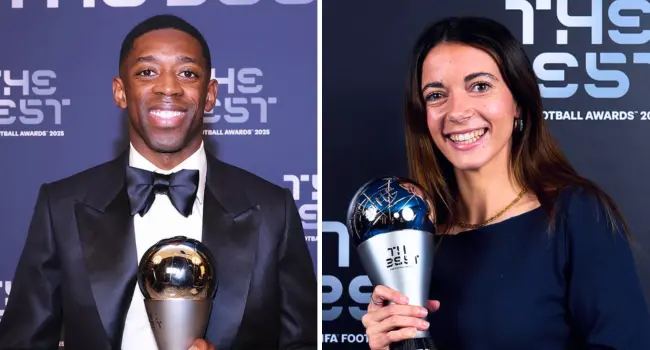
Ousmane Dembélé’s season was particularly significant. The forward played a central role in PSG’s campaign, delivering decisive performances in major competitions and consistently influencing high-profile matches. His contribution was recognised not only through his inclusion in the Best 11 but also through his individual accolade as FIFA Men’s Player of the Year.
Defensively, Achraf Hakimi and Nuno Mendes were recognised for their attacking contributions from full-back positions as well as their defensive reliability. Gianluigi Donnarumma’s selection reflects his consistency and leadership in goal, particularly during decisive knockout matches.
Vitinha’s inclusion in midfield signals recognition of his growing influence in controlling tempo and linking play, while Willian Pacho’s presence acknowledges a breakout season marked by composure and defensive discipline.
Although PSG dominated the list, the inclusion of players from other clubs such as Virgil van Dijk, Jude Bellingham, Cole Palmer, Pedri, and Lamine Yamal reflects the competitive depth of the global game and ensures the selection remains representative of elite football beyond one club.
Women’s Best 11 Highlights European Strength
In contrast to the men’s selection, the women’s Best 11 was shaped largely by national rather than club dominance. Spain and England emerged as the most influential nations, accounting for the majority of players in the final team.
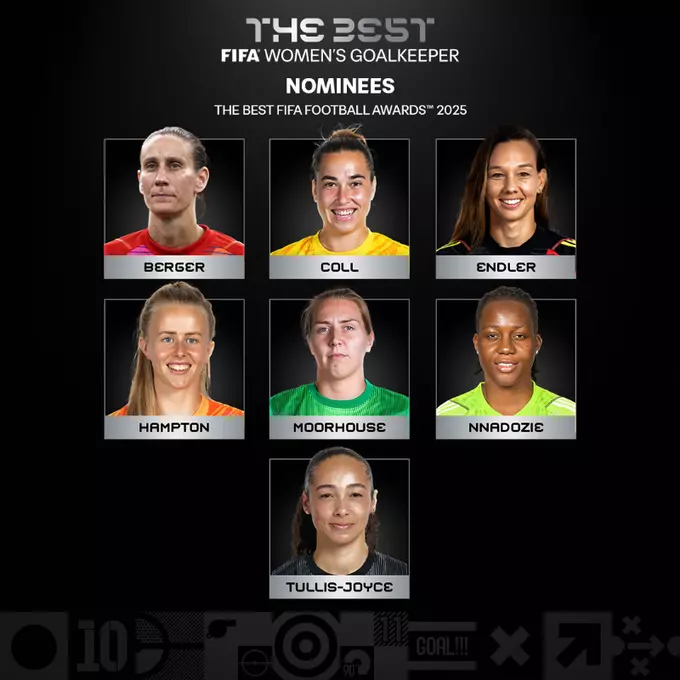
The women’s Best 11 includes Hannah Hampton as goalkeeper; Lucy Bronze, Leah Williamson, Irene Paredes, and Ona Batlle in defence; Clàudia Pina, Patri Guijarro, and Aitana Bonmatí in midfield, with Mariona Caldentey, Alessia Russo, and Alexia Putellas in attack.
Spanish players make up seven of the eleven selections, underlining the country’s sustained excellence in women’s football. England’s four representatives further reflect the strength of the Women’s Super League and the national team’s continued competitiveness at the international level.
Aitana Bonmatí’s inclusion comes alongside her recognition as FIFA Women’s Player of the Year, marking another milestone in her career. Her performances throughout the season demonstrated technical excellence, creativity, and leadership, qualities that have become synonymous with Spain’s midfield dominance.
Alexia Putellas’s and Mariona Caldentey’s selections reinforce Spain’s attacking depth, while the defensive pairing of Irene Paredes and Ona Batlle highlights the country’s tactical organisation and defensive consistency.
England’s representation includes Lucy Bronze, Leah Williamson, Alessia Russo, and Hannah Hampton. Their inclusion reflects England’s continued presence at the top level of women’s football, particularly in major tournaments and domestic competitions.
The 2025 Best 11 awards serve as more than individual recognition; they offer a snapshot of football’s current balance of power. PSG’s dominance in the men’s team points to a club that successfully converted investment into elite performance, while the women’s selection reflects the sustained success of structured national development systems in Europe.
FIFA’s selection process aims to balance individual brilliance with team impact, ensuring that players who consistently influenced outcomes over the season are rewarded. The inclusion of players across multiple leagues and competitions highlights football’s global reach while maintaining a strong European presence.
Reaction to the announcement has been immediate across the football community, with analysts noting the symbolic importance of PSG’s representation. The club’s ability to place players in every department of the men’s Best 11 underscores its comprehensive approach to squad building and tactical balance.
Similarly, the women’s selection reinforces the growing visibility and competitiveness of women’s football. The prominence of Spanish and English players reflects sustained investment in domestic leagues, youth development, and international competition.
As the football calendar continues, the 2025 Best 11 will stand as a benchmark for excellence over the past season. For PSG, the recognition affirms their position among football’s elite clubs. For Spain and England, the women’s selections validate years of structured growth and competitive consistency.
The awards also set expectations for the next cycle, with players and clubs now measured against the standard established by this year’s selections. As football evolves, future editions of the Best 11 will continue to reflect shifts in dominance, emerging talent, and the global nature of the sport.
For now, the 2025 announcement confirms one clear narrative: Paris Saint-Germain dominated the men’s conversation, while European excellence defined the women’s game.