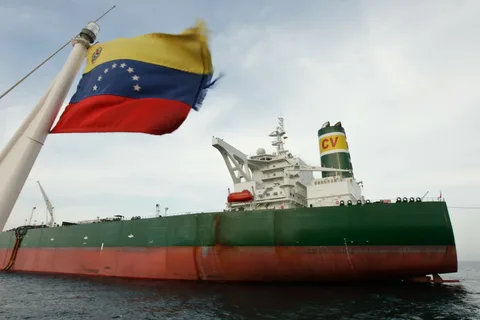
The United States President Donald Trump has ordered a maritime blockade targeting oil tankers entering and leaving Venezuela that are found to be in violation of U.S. sanctions, marking a significant escalation in Washington’s long-running pressure campaign against the South American nation.
According to senior administration officials, the directive authorises U.S. naval and maritime enforcement agencies to intercept, inspect, and, where necessary, deny passage to oil tankers suspected of transporting Venezuelan crude or refined petroleum products in breach of existing sanctions. The move is aimed at cutting off what U.S. authorities describe as a critical financial lifeline for the government in Caracas.
The order represents one of the most assertive enforcement measures taken by the Trump administration against Venezuela’s oil sector, which has been under U.S. sanctions for several years. It underscores Washington’s determination to prevent sanctioned oil from reaching international markets and to deter foreign entities from facilitating what the U.S. considers unlawful trade with the Venezuelan state.
A New Phase in Sanctions Enforcement
U.S. officials said the blockade is not a blanket restriction on all maritime traffic to and from Venezuela but is instead narrowly focused on vessels linked to sanctioned oil transactions. Tankers flagged for suspicious activity, including ship-to-ship transfers, falsified destination records, or disabled tracking systems, will be subject to heightened scrutiny.
“This action is about enforcement,” a senior administration source said. “Sanctions only work if they are enforced. For too long, sanctioned oil has continued to move through deceptive practices at sea. This order is designed to close those loopholes.”
The administration emphasised that the directive operates within existing legal frameworks and is intended to support previously announced sanctions rather than introduce entirely new ones. Nevertheless, analysts say the use of naval power to actively interdict oil shipments represents a sharp escalation in tone and posture.
Venezuela’s Oil at the Center of the Dispute
Venezuela holds some of the world’s largest proven oil reserves, and petroleum exports have historically been the backbone of its economy. However, years of economic mismanagement, declining infrastructure, and international sanctions have dramatically reduced output and export capacity.
U.S. sanctions on Venezuela’s oil sector were first imposed to pressure the government over democratic backsliding, human rights concerns, and allegations of corruption. Washington has consistently argued that oil revenues are being used to entrench political power rather than address the country’s humanitarian and economic crises.
Despite the sanctions, Venezuelan crude has continued to find its way to international buyers through complex shipping arrangements, intermediaries, and, in some cases, the cooperation of foreign governments and companies willing to risk U.S. penalties.
The Trump administration’s blockade order appears designed to disrupt these channels more aggressively by targeting the physical movement of oil rather than relying solely on financial and legal deterrents.
International and Regional Implications
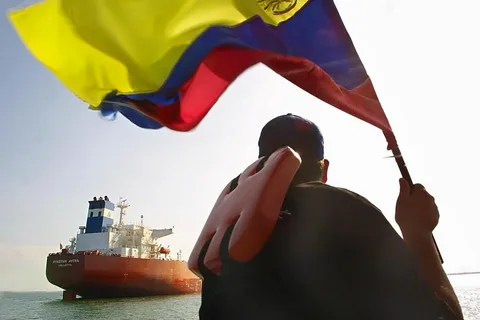
The decision has drawn close attention from the international community, particularly from countries with commercial or strategic ties to Venezuela. Some governments have expressed concern that the blockade could heighten tensions in the Caribbean and disrupt regional shipping routes.
Maritime law experts note that while nations have the right to enforce sanctions, the interception of vessels on the high seas raises complex legal and diplomatic questions. The United States maintains that its actions are consistent with international law and justified by national security and foreign policy objectives.
“This is a high-stakes move,” said a former U.S. naval officer now working as a security analyst. “Interdicting oil tankers is not just a bureaucratic exercise. It involves real-world risks, from miscalculations at sea to diplomatic fallout if foreign-flagged vessels are involved.”
Latin American leaders have offered mixed reactions. Some governments aligned with Washington have voiced support for tougher enforcement, arguing that sanctions lose credibility when they are easily bypassed. Others have warned that the blockade could exacerbate Venezuela’s economic hardship and deepen regional instability.
Response from Caracas
The Venezuelan government has condemned the blockade order in strong terms, calling it an act of economic aggression and a violation of international norms. Officials in Caracas accused Washington of attempting to strangle the country’s economy and punish ordinary citizens.
In a statement released by state media, Venezuelan authorities said the United States was using its naval power to impose what they described as an “illegal siege” and vowed to continue exporting oil through all available means.
The government also warned that any attempt to stop Venezuelan vessels would be met with diplomatic protests and potential legal action in international forums. While Venezuela’s navy is significantly smaller than that of the United States, the rhetoric highlights the potential for heightened tensions.
Impact on Global Oil Markets
Energy analysts are closely watching the situation for signs of disruption to global oil supply. While Venezuela’s current exports represent a relatively small share of the global market compared to previous decades, any sudden interruption can have ripple effects, particularly in tight markets.
Traders say the blockade could further complicate already opaque Venezuelan oil flows, increasing uncertainty and volatility. Some buyers may retreat from Venezuelan crude altogether, while others may seek alternative arrangements to avoid scrutiny.
“The immediate impact may be limited, but the psychological effect on the market is real,” said an energy economist. “When a major naval power signals it is willing to physically enforce sanctions, it changes risk calculations across the board.”
The blockade order also carries domestic political significance. Throughout his presidency, Donald Trump pursued a hardline approach toward governments he viewed as hostile to U.S. interests, including Venezuela. The move aligns with his broader foreign policy narrative of strength, enforcement, and opposition to socialist governments in the Western Hemisphere.
Supporters of the decision argue that it demonstrates resolve and addresses what they see as weaknesses in previous sanctions enforcement. Critics, however, question whether the strategy will achieve its stated goals or merely deepen humanitarian suffering in Venezuela.
Members of Congress have expressed differing views, with some praising the administration for taking decisive action and others calling for greater emphasis on diplomacy and humanitarian considerations.
The long-term effectiveness of the blockade will depend on several factors, including the level of international cooperation, the adaptability of Venezuelan exporters, and the willingness of the United States to sustain an active maritime enforcement presence.
Analysts say the order sends a strong signal to shipping companies, insurers, and port operators that involvement in sanctioned Venezuelan oil trade carries heightened risk. Even without frequent interdictions, the mere possibility of inspection or seizure could deter participation.
At the same time, the move raises questions about escalation and exit strategies. If the blockade fails to produce political change in Caracas, Washington may face pressure to either intensify measures further or reconsider its approach.
For now, the directive stands as one of the most assertive steps taken by the Trump administration against Venezuela’s oil sector, reinforcing the message that U.S. sanctions are not merely symbolic but backed by tangible enforcement power.
As the situation develops, the blockade is likely to remain a focal point in discussions about sanctions policy, international law, and the balance between economic pressure and humanitarian impact. Whether it succeeds in reshaping Venezuela’s political and economic trajectory remains an open question, but its implications are already being felt far beyond the country’s shores.