
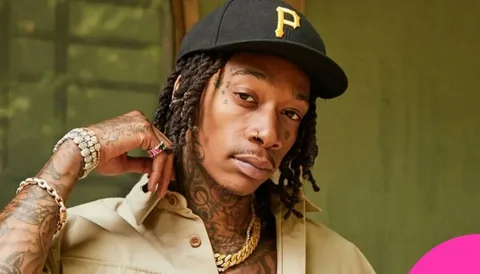
American rapper Wiz Khalifa, born Cameron Jibril Thomaz, is currently under legal scrutiny in Romania following a marijuana-related incident that has drawn international attention and raised questions about the country’s strict drug laws. Reports circulating in global media indicate that the artist could face a prison sentence of up to nine months if found guilty, though Romanian authorities have clarified that no conviction has been made and legal proceedings are still ongoing.
The incident occurred during Wiz Khalifa’s visit to Romania for a major music festival where he was scheduled to perform as part of an international lineup. According to Romanian law enforcement officials, the rapper was found in possession of marijuana and was allegedly observed using the substance in a public setting linked to the event. The matter was subsequently referred to prosecutors, who opened an investigation to determine whether criminal charges should be filed.
Romanian law classifies marijuana as an illegal narcotic, and its possession or use is prohibited regardless of quantity. Unlike in parts of the United States and other countries where cannabis has been legalised or decriminalised, Romania maintains a firm zero-tolerance policy toward recreational drug use. The law applies equally to citizens and foreign nationals, including visiting artists and performers.
Legal experts explain that penalties for marijuana possession in Romania vary based on the circumstances of the offence. Factors such as the amount involved, the location of the incident, and whether the act occurred in public may influence prosecutorial decisions. In cases involving personal use, the law allows for penalties ranging from fines and suspended sentences to short-term imprisonment. Under certain provisions, custodial sentences may extend to several months, with a maximum term that can reach or exceed nine months depending on judicial interpretation.
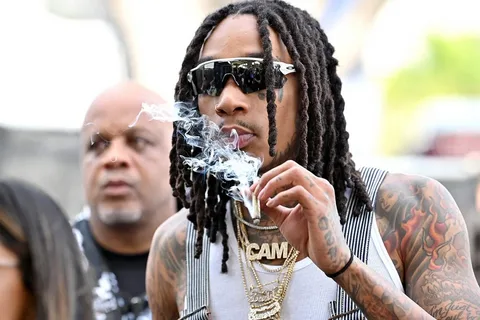
The widely cited nine-month figure represents the upper range of what Romanian law permits, not a sentence that has already been imposed. Authorities have emphasised that Wiz Khalifa has not been arrested or sentenced and that the case remains in its preliminary phase. Prosecutors are still reviewing evidence and determining the most appropriate legal response.
Wiz Khalifa is internationally known for his open association with cannabis culture. Throughout his career, he has spoken publicly about marijuana use, referenced it frequently in his music, and invested in legal cannabis businesses in the United States. While such activities are lawful in several American states, they do not carry legal weight in countries where marijuana remains fully criminalised.
The case has reignited broader discussions about the risks faced by international celebrities who travel across borders with vastly different legal systems. Legal analysts note that cultural acceptance in one country does not translate into legal protection abroad. In Romania, public drug use, especially during organised events, is treated as a serious offence and may be considered an aggravating factor.
Public reaction has been divided. Fans of the rapper have expressed concern and surprise, while others have argued that foreign visitors are obligated to respect local laws regardless of personal beliefs or international status. The situation has also prompted commentary from drug policy reform advocates, who question whether imprisonment for marijuana possession is proportionate in modern society. Romanian authorities, however, have defended their legal framework, stating that the law is clear and uniformly enforced.
At this stage, several outcomes remain possible. Prosecutors may decide to pursue formal charges, issue a fine, or recommend alternative penalties depending on the final assessment of the case. If charges are filed, the matter could proceed to court, where judges would consider mitigating factors such as cooperation with authorities, lack of prior offences, and absence of intent to distribute drugs.
There has been no indication of diplomatic intervention, though cases involving high-profile foreign nationals are typically monitored by embassies to ensure due process. Wiz Khalifa is expected to rely on legal counsel familiar with Romanian criminal law as proceedings continue.
Beyond the immediate legal implications, the case serves as a cautionary example for international performers and public figures. Touring artists often move rapidly between countries with differing legal standards, and failure to adapt to local laws can result in serious consequences.
While headlines suggesting that Wiz Khalifa is facing nine months in a Romanian prison have captured global attention, the reality remains more complex. The figure reflects a legal possibility rather than a confirmed outcome. Until the investigation concludes and any court proceedings are finalised, the final resolution of the case remains uncertain.
For now, the matter stands as a developing news story at the intersection of celebrity culture, international travel, and strict national drug enforcement laws.
finalised,Don’t Miss