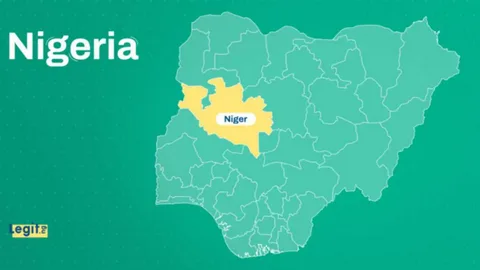
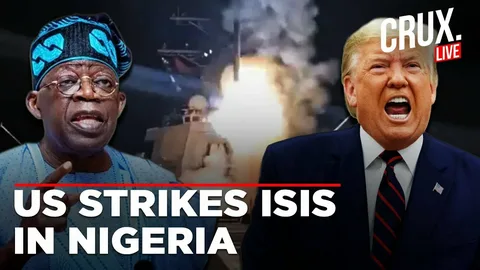
Christmas Day is typically associated with calm, celebration, and religious observance across much of the world. In Nigeria, it carries even deeper meaning, particularly in Christian-majority regions where it represents a period of communal gathering and spiritual reflection. When reports emerge of United States military strikes connected to Nigeria on Christmas Day, the timing alone raises questions, concern, and in some cases outrage.
Yet these actions are rarely spontaneous or symbolic. They are usually the outcome of long-standing security calculations, intelligence assessments, and counterterrorism priorities that extend far beyond a single calendar date. To understand why such strikes occur, it is essential to move past the initial shock and examine the broader context of Nigeria’s security challenges, the United States’ global military posture, and the evolving nature of modern warfare.
This analysis explains what is really going on.
Understanding the Context of US Military Involvement in Nigeria
The United States does not operate a conventional warfront in Nigeria. There are no large-scale American troop deployments or permanent combat bases publicly acknowledged within the country. Instead, US involvement has historically focused on intelligence sharing, training, surveillance, and limited counterterrorism support.
Nigeria has, for over a decade, faced persistent threats from extremist groups, particularly in the northern and northeastern regions. These groups have carried out attacks against civilians, religious institutions, military installations, and international interests. While their activities are primarily local or regional, some have pledged allegiance to broader global extremist networks that the United States considers direct security threats.
From Washington’s perspective, Nigeria is not merely a domestic security concern. It is a strategic node in a wider counterterrorism map that includes the Sahel, Lake Chad Basin, and parts of West and Central Africa.
When US strikes occur in connection with Nigeria, they are usually framed as preventive or defensive actions, designed to disrupt networks before they can carry out attacks that may affect American citizens, allies, or global security interests.
Why Christmas Day Matters Strategically
The timing of military strikes on Christmas Day is often interpreted emotionally, especially in predominantly Christian communities. However, military operations rarely align themselves with religious calendars.
There are three key reasons why such strikes may occur on Christmas Day.
First, intelligence windows do not pause for holidays. If actionable intelligence emerges indicating an imminent threat, military decision-makers prioritise timing based on opportunity and urgency, not symbolism.
Second, militant groups themselves have historically used religious holidays to stage attacks, believing that heightened gatherings offer both tactical advantage and symbolic impact. Security agencies, including those of the United States, are acutely aware of this pattern and may act pre-emptively during such periods.
Third, operational surprise is a central principle of military strategy. Holidays often lower alert levels among targets, making them moments when strikes can be more effective.
In this sense, Christmas Day becomes less a chosen date and more an incidental one.
What the US Is Typically Targeting
It is important to clarify that US-linked strikes associated with Nigeria are rarely aimed at Nigerian state institutions or civilians. Instead, they tend to focus on specific categories of targets.
These usually include senior extremist commanders believed to be coordinating attacks, training camps in remote or inaccessible terrain, logistics hubs used for weapons movement, or communication nodes linking local groups to international networks.
In many cases, the strikes do not physically occur within Nigeria’s borders but are connected to Nigerian-based threats operating across porous regional boundaries. The Lake Chad Basin, for example, spans multiple countries and allows armed groups to move quickly between jurisdictions.
The language used by US officials often avoids detailed disclosure, citing operational security. This lack of detail can create information gaps that fuel speculation and misinformation, especially on social media.
Nigeria’s Role and Level of Consent
One of the most contentious questions is whether Nigeria authorises or cooperates in such actions.
Officially, Nigeria maintains its sovereignty and leads its own military operations. However, modern counterterrorism efforts are rarely unilateral. Intelligence-sharing agreements, joint task forces, and behind-the-scenes coordination are common, even when not publicly acknowledged.
In some instances, Nigerian authorities may quietly consent to foreign assistance when local capabilities are overstretched. In others, the United States may act independently to protect its interests, particularly if threats are deemed transnational.
The lack of transparency around these arrangements contributes to public confusion and suspicion, but it also reflects the sensitive nature of security diplomacy.
Civilian Impact and Ethical Concerns
Any military strike, regardless of intent, raises concerns about civilian harm. This is especially true in regions where militants operate close to local communities.
The United States consistently states that it employs precision targeting and strict engagement rules to minimise civilian casualties. However, independent verification is often difficult, and affected communities may experience displacement, trauma, or loss of livelihood even when not directly harmed.
For Nigeria, this presents a moral and political dilemma. While eliminating extremist threats is essential, reliance on external military power can deepen perceptions of foreign interference and erode trust among local populations.
These concerns underscore the need for complementary non-military approaches, including governance reform, economic development, and community-based deradicalisation.
What This Means for Nigeria’s Global Standing
US military actions linked to Nigeria send signals beyond immediate security objectives. They shape how Nigeria is perceived internationally.
On one hand, such actions reinforce the idea that Nigeria is a frontline state in the global fight against extremism. This can attract international support, funding, and strategic partnerships.
On the other hand, repeated association with counterterrorism strikes can reinforce narratives of instability and insecurity, which may affect investment, tourism, and diplomatic leverage.
For Nigerian policymakers, balancing security cooperation with national image management remains a delicate task.
The Information Gap and Public Reaction
One of the most striking aspects of these incidents is how little verified information reaches the Nigerian public. In the absence of clear official statements, rumours fill the vacuum.
Social media amplifies partial reports, emotional reactions, and geopolitical speculation. Christmas Day, already charged with religious significance, intensifies these reactions.
This highlights a broader communication challenge. In an era of instant information, governments that fail to communicate clearly risk losing control of the narrative, even when actions are defensible.
Is This Likely to Continue?
From an analytical standpoint, US-linked strikes connected to Nigeria are not anomalies. They are part of a long-term counterterrorism strategy that prioritises disruption over occupation.
As long as extremist networks operate in or around Nigeria and maintain links to international movements, such interventions are likely to remain on the table.
However, their frequency and visibility may fluctuate depending on political leadership in Washington, Nigeria’s own security capacity, and broader regional dynamics.
The Bigger Picture
Ultimately, Christmas Day strikes involving the United States and Nigeria are not about the holiday itself. They are about unresolved security challenges, fragile regions, and the complex realities of global counterterrorism.
For Nigeria, the real story lies not in the date of the strikes but in the underlying conditions that make them possible. Addressing those conditions requires more than military force. It demands long-term investment in stability, trust, and opportunity.
Until then, moments like these will continue to surface, provoke outrage, and demand explanation.
And that is why understanding what is really going on matters.