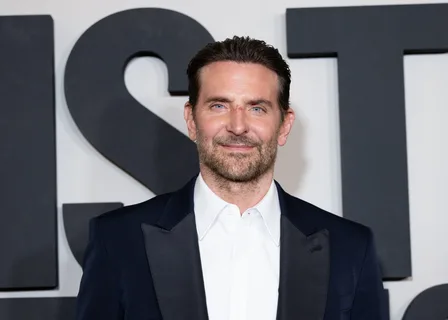
In an era where celebrity faces are scrutinised with forensic intensity, the question of cosmetic enhancement has become less about surgery itself and more about authenticity, expectation and public ownership of private bodies. Few actors illustrate this tension better than Bradley Cooper. Over the years, subtle changes in his appearance have triggered recurring speculation, often framed as certainty rather than curiosity. The conversation resurfaced when Cooper addressed whether he has undergone cosmetic surgery, and his response offers more than a simple denial. It opens up a wider discussion about ageing, image maintenance and the unusual pressures placed on long-serving Hollywood stars.
Bradley Cooper has spent more than two decades in the public eye. From early television roles to global stardom in major film franchises and award season staples, his face has been photographed, analysed and archived at every stage. This extensive visual record makes him a frequent subject of before-and-after comparisons, where isolated images are treated as proof of cosmetic intervention. What is often missing from these discussions is context. Faces change gradually, shaped by age, weight, stress, health, lighting and even the physical demands of certain roles.
When Cooper spoke about cosmetic surgery, he did not adopt the defensive tone many celebrities choose. He treated the topic as an inevitable part of fame. He stated clearly that he has not had plastic surgery and does not feel compelled to preserve a younger version of himself. At the same time, he acknowledged taking care of himself, both professionally and personally. That distinction is important. Looking well maintained is not the same as being surgically altered, yet public conversations frequently blur the line between the two.
There is a growing tendency to collapse all forms of aesthetic care into a single category. cosmetic surgery, non-invasive cosmetic treatments, dermatological care, fitness routines and professional grooming are often discussed as though they produce identical outcomes. In reality, they exist on a spectrum. An actor whose livelihood depends on physical credibility is likely to invest in skincare, nutrition, training and rest, particularly with age. None of these choices involve surgical modification, yet all can significantly influence appearance.
Part of what fuels ongoing speculation around Cooper is that his ageing has not followed a predictable Hollywood pattern. He has not dramatically withdrawn from leading roles, nor has he returned with a visibly altered face that signals reinvention. Instead, his appearance has matured in a way that still fits commercial expectations. For some observers, this seems implausible. The assumption that longevity in Hollywood must be underpinned by cosmetic intervention has become deeply ingrained.
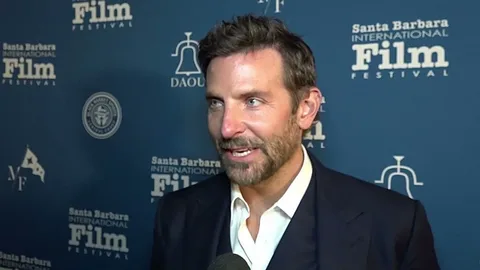
A closer look at the moments most often cited as evidence of surgery reveals how fragile many of these claims are. Changes in facial fullness, skin texture or the eye area are frequently attributed to procedures when they may be the result of weight fluctuation, fatigue, facial hair choices or the cumulative effects of long working hours. Cooper has taken on physically demanding roles that required noticeable body changes, which naturally affect the face. He has also spent years balancing acting with directing and producing, responsibilities that introduce different kinds of stress.
Lighting and camera technology further complicate visual comparisons. High-definition cameras, digital colour grading and close-up shots can exaggerate or soften features dramatically. A studio portrait, a film still and a candid photograph capture entirely different versions of the same face. Yet these images are often placed side by side as though they exist under identical conditions.
Grooming choices also play a quiet but influential role. Hairstyles, facial hair, eyebrows and dental work can subtly reshape how a face is perceived. Cooper has alternated between clean-shaven and bearded looks throughout his career, sometimes appearing sharper, other times more rugged. These shifts can create the illusion of structural change where none exists.
The persistence of cosmetic surgery rumours says as much about cultural discomfort with ageing as it does about Cooper himself. While women in entertainment have long faced invasive scrutiny, ageing male actors are increasingly subject to similar expectations. For men, however, the accusation is often framed as deception rather than vanity. The implication is not that they care too much about appearance, but that they are concealing the truth.
Cooper’s public persona complicates this narrative. He has often spoken openly about vulnerability, personal growth and mental health, presenting himself as reflective rather than image-driven. This makes it harder to reconcile his maintained appearance with assumptions about secrecy or denial. His openness disrupts the idea that caring for one’s appearance must be accompanied by dishonesty.
The demand for transparency around cosmetic procedures raises a broader ethical question. Does a public figure owe the audience full disclosure about their body? Cooper’s response suggests he does not believe so. By addressing the question once and refusing to engage in repeated clarification, he draws a boundary between professional visibility and personal autonomy.
In the age of algorithm-driven content, rumours often gain momentum through repetition rather than evidence. Articles and social posts recycle the same images and speculative language, reinforcing assumptions without offering new insight. An evergreen examination must step outside that cycle and ask why the question continues to matter.
Cosmetic surgery itself is not the issue. It is a personal choice shaped by medical, psychological and cultural factors. The problem emerges when speculation becomes accusation, and when natural ageing is treated as suspicious. Cooper’s experience illustrates how difficult it has become for public figures to exist visibly over time without their faces being treated as public property.
There is also a strategic dimension to Cooper’s approach. By allowing his appearance to evolve gradually, he aligns himself with career longevity rather than constant reinvention. This supports a shift into roles that prioritise emotional depth and credibility over physical perfection. It also builds trust with audiences who value continuity.
Unlike stars who periodically reappear with dramatically altered looks, Cooper’s consistency works in his favour. Viewers recognise him not just as a character but as someone whose life seems to progress in real time. Paradoxically, this continuity may invite even more scrutiny, because it challenges the assumption that visible ageing in Hollywood must be artificial.
Ultimately, Bradley Cooper’s response to cosmetic surgery rumours offers a broader lesson about how celebrity narratives are constructed. It highlights the limits of visual analysis and the risks of conflating maintenance with modification. More importantly, it asks whether audiences are willing to accept ageing as an uneven, individual process, even for those whose faces feel familiar.
As cosmetic procedures become more normalised, the assumption that everyone participates grows stronger. In that environment, choosing not to intervene can appear as radical as choosing to do so. Cooper’s refusal to dramatise or deny speculation suggests a quieter alternative. Indifference.
By resisting both secrecy and spectacle, he presents a narrative that values continuity over correction. Not every change requires an explanation, and not every face conceals a hidden story. In treating the subject with restraint, Cooper reminds us that ageing is not a scandal, and maintenance is not a confession.