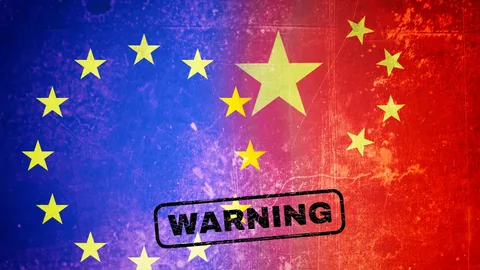
China is intensifying diplomatic pressure on European governments to prevent visits or official engagement with Taiwanese politicians, warning that such contacts would cross what it describes as a political “red line”. The message has been delivered through formal diplomatic channels and informal exchanges, according to officials familiar with the matter, and reflects Beijing’s increasingly assertive posture toward Taiwan-related engagement outside Asia.
At the centre of the dispute is China’s long-standing position that Taiwan is part of its territory and that no country should treat the island as a sovereign political entity. While most European states adhere to a one-China policy, Beijing has grown more sensitive to what it views as incremental shifts, particularly parliamentary visits, ministerial meetings, or symbolic gestures that elevate Taiwan’s political profile.
What China is demanding
Chinese officials have urged European governments to deny entry or official platforms to Taiwanese politicians, especially those holding senior or elected office. The warnings are framed around maintaining the one-China principle and avoiding actions that could be interpreted as recognition of Taiwan’s political authority.
The language used by Beijing has become firmer in recent months, with references to “red lines” and “consequences” replacing earlier diplomatic cautions. While the specific consequences are rarely detailed, they are generally understood to include downgrading political ties, limiting economic cooperation, or suspending bilateral dialogues.
China’s position distinguishes between unofficial cultural or commercial exchanges, which it tolerates, and political engagement, which it considers unacceptable. Parliamentary invitations, meetings with government officials, or public statements endorsing Taiwan’s international role fall into the latter category.
Why Europe is a focal point
Europe has emerged as a sensitive arena for Beijing due to a gradual recalibration of China policy across several EU member states. Concerns over economic dependence, human rights, technology security, and alignment with the United States have led some European governments and parliaments to adopt a more cautious or critical stance toward China.
Within this context, Taiwan has gained increased attention as a democratic partner and a key player in global semiconductor supply chains. Parliamentary delegations from Europe have visited Taiwan more frequently in recent years, often emphasising democratic solidarity rather than formal recognition.
Beijing views these visits as eroding the practical boundaries of the one-China policy, even if governments insist they do not represent a change in official recognition.
Taiwan’s growing international outreach
Taiwan has actively sought to expand its international presence through parliamentary diplomacy, trade offices, and cultural engagement, particularly with democratic states. Taiwanese officials argue that such outreach is legitimate and necessary, given Taiwan’s exclusion from many international organisations.
European engagement with Taiwan has largely focused on trade, technology cooperation, and shared democratic values. However, Beijing sees the political symbolism of hosting Taiwanese politicians as more significant than the substance of discussions.
For Taiwan, European engagement provides diplomatic breathing space amid growing military and political pressure from China. For China, it represents a challenge to its claim of exclusive authority over cross-strait relations.
In Chinese diplomatic language, the term “red line” signals a boundary that should not be crossed under any circumstances. Its use in relation to Taiwan’s engagement with Europe indicates a hardening stance and a reduced tolerance for ambiguity.
Historically, Beijing has responded strongly to what it perceives as violations of its core interests, including sovereignty and territorial integrity. Previous examples include sanctions against officials, trade restrictions, or the suspension of diplomatic channels.
By invoking a red line, China is seeking to deter European governments from allowing even symbolic political interactions with Taiwan, reinforcing the message that such actions would have tangible costs.
How European countries are responding
European responses have varied. Some governments have reiterated their commitment to the one-China policy while emphasising the independence of parliamentary bodies, which operate separately from the executive branch. This distinction allows governments to distance themselves from parliamentary visits without explicitly blocking them.
Other countries have taken a more cautious approach, quietly discouraging high-profile engagements to avoid friction with Beijing. Smaller states with significant economic exposure to China are often more sensitive to potential repercussions.
At the EU level, there is no unified policy on hosting Taiwanese politicians, leaving individual member states to navigate the issue based on domestic politics and bilateral considerations.
Economic and political leverage
China’s warnings are underpinned by its economic weight. For many European countries, China remains a major trading partner, export destination, and source of investment. This gives Beijing leverage, particularly in sectors such as manufacturing, automotive supply chains, and consumer goods.
At the same time, Europe has become more alert to the risks of over-reliance on China. This has reduced, but not eliminated, Beijing’s influence. The current pressure campaign tests how far European governments are willing to prioritise political principles over economic pragmatism.
Implications for EU-China relations
The Taiwan issue adds another layer of strain to already complex EU-China relations. Disputes over trade, market access, human rights, and security have made engagement more transactional and less trusting.
If China escalates pressure or follows through on punitive measures, it could further harden European attitudes and accelerate efforts to diversify economic ties. Conversely, European compliance could reinforce Beijing’s confidence in using coercive diplomacy to shape foreign policy behaviour.
What this means for Taiwan
For Taiwan, the situation underscores the limits of its international space and the sensitivity surrounding its diplomatic engagement. While European interest offers political support, it also exposes partners to Chinese retaliation.
Taiwanese officials are likely to continue pursuing engagement that stops short of formal recognition, relying on informal diplomacy and issue-based cooperation. However, the space for such engagement may narrow if European governments opt for greater caution.
Attention will focus on whether China moves from warnings to concrete action, particularly in response to upcoming parliamentary visits or public meetings involving Taiwanese officials. The reaction of major European capitals will be closely watched, as their decisions often set precedents for smaller states.
The episode highlights a broader trend in global diplomacy, where China is increasingly willing to draw explicit boundaries and apply pressure to enforce them. How Europe responds will shape not only its relationship with China, but also the future scope of its engagement with Taiwan.
For now, the message from Beijing is clear: political contact with Taiwan remains one of the most sensitive fault lines in China’s foreign relations, and Europe is being asked to choose how closely it is willing to approach it.