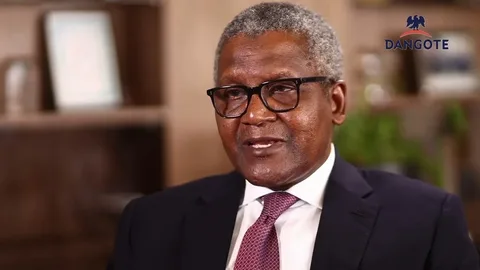
Aliko Dangote has appointed two of his daughters to senior leadership roles within Dangote Group, placing them in strategic and commercial positions at Group level as the conglomerate strengthens its internal governance and long-term leadership framework.
The appointments involve Mariya Aliko Dangote and Halima Aliko Dangote, both of whom now hold executive responsibilities that cut across multiple business units within the Group. The move introduces deeper second-generation involvement in the conglomerate’s leadership structure while Aliko Dangote continues in his role as chairman.
Mariya Aliko Dangote has been appointed Group Strategy and Portfolio Development Director. Her role centres on long-term planning, investment assessment, and portfolio management across Dangote Group’s diverse operations. She is responsible for evaluating new business opportunities, reviewing capital deployment, and ensuring strategic alignment among the Group’s subsidiaries.
Halima Aliko Dangote has been appointed Group Executive Director, Commercial Operations. Her responsibilities cover sales strategy, commercial coordination, market development, and revenue optimisation across Dangote Group’s operating companies. The role places her at the centre of customer-facing activities and market execution, particularly in sectors where the Group maintains dominant positions.
Both appointments operate at Group level and do not replace the managing directors or chief executives of individual subsidiaries. Day-to-day operational control of businesses such as cement manufacturing, sugar refining, salt processing, fertiliser production, and logistics remains with professional management teams that oversee production, compliance, and operational efficiency.
Dangote Group is Africa’s largest privately owned industrial conglomerate and one of Nigeria’s most economically significant enterprises. Its activities span manufacturing, agriculture, energy, and infrastructure, with operations extending across several African countries. The Group’s scale, capital intensity, and influence on regional supply chains make internal leadership decisions particularly consequential.
The appointments are not framed as a formal succession announcement. However, they provide the clearest indication to date of how Dangote Group is embedding continuity into its leadership structure. Rather than a sudden transition, the approach reflects a gradual integration of next-generation leadership into strategic oversight and commercial coordination.
Mariya Aliko Dangote has previously worked on internal strategic initiatives within the Group, including planning exercises and project evaluations. Her appointment consolidates those responsibilities within a formal executive role that sits at the centre of the Group’s decision-making architecture. The strategy and portfolio function plays a critical role in coordinating investments across sectors that require long-term planning and large capital commitments.
Dangote Group’s expansion into fertiliser production and energy-related infrastructure has significantly increased the complexity of its investment portfolio. Strategic oversight is required to balance funding, timelines, regulatory engagement, and cross-border execution. The Group Strategy and Portfolio Development role is designed to manage these dynamics at a consolidated level.
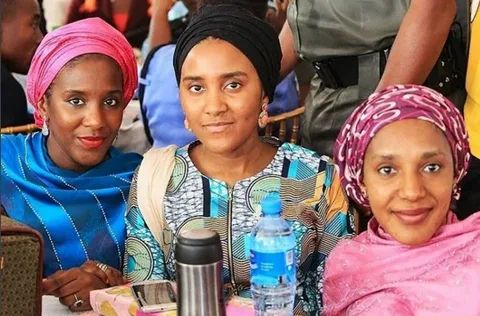
Halima Aliko Dangote has professional experience in branding, marketing, and commercial strategy within Dangote businesses. Her appointment formalises oversight of commercial activities across subsidiaries, aligning pricing, sales execution, and market positioning with Group-wide objectives. Commercial coordination is particularly important for Dangote Group given its footprint in consumer-facing sectors and its reliance on distribution networks across multiple regions.
The commercial operations role also interfaces with logistics and supply chain planning, ensuring that production output aligns with market demand. In capital-intensive industries such as cement and fertiliser, effective commercial planning is essential to maintaining utilisation rates and revenue stability.
Dangote Group’s leadership structure has evolved significantly over the past decade as the company expanded beyond its original manufacturing base. The Group has invested in formal governance systems, including executive committees, internal reporting frameworks, and board oversight mechanisms. These systems are designed to manage risk, ensure accountability, and support large-scale operations.
Professional executives continue to lead individual subsidiaries, many of whom have been with the Group for extended periods. Their responsibilities include operational management, regulatory compliance, financial performance, and workforce oversight. The appointments of Mariya and Halima Dangote do not alter this structure but add a layer of coordination at Group level.
The integration of family members into senior leadership roles follows governance models commonly used by large family-owned conglomerates globally. In such models, ownership and strategic oversight gradually transition to the next generation while professional managers retain operational control. This approach is intended to preserve institutional knowledge while ensuring continuity.
Succession planning has become an increasingly prominent issue among major Nigerian enterprises founded by first-generation entrepreneurs. As businesses grow in size and complexity, structured leadership transition is seen as critical to long-term stability. Dangote Group’s approach reflects this broader trend within the corporate sector.
Public attention to the appointments has been heightened by Dangote Group’s influence on Nigeria’s economy. The conglomerate is one of the country’s largest employers and a major contributor to industrial output, foreign exchange substitution, and infrastructure development. Leadership changes within the Group therefore attract scrutiny from investors, policymakers, and the business community.
Reactions to the appointments have varied. Some observers view the move as a natural step within a family-owned enterprise, particularly given the scale and maturity of Dangote Group. Others have emphasised the importance of maintaining transparency, professional standards, and clear accountability structures.
Dangote Group has consistently stated that leadership appointments are based on internal capacity, experience, and alignment with organisational needs. The Group has not indicated that the appointments will affect its governance principles or management practices.
Aliko Dangote remains actively involved in overseeing the Group’s direction as chairman. He continues to engage with major projects, strategic partnerships, and stakeholder relationships. No additional leadership changes have been announced, and there has been no indication of an imminent handover.
The timing of the appointments coincides with a period of consolidation for Dangote Group, as several major investments move from construction and development phases into operational stages. Coordinated strategy and commercial execution are critical during this phase to ensure returns on capital and long-term sustainability.
For Dangote Group, the appointments reinforce a leadership model that combines founder oversight, professional management, and next-generation involvement. The structure is designed to support continuity while managing the demands of large-scale industrial operations.
As the Group continues to expand and adapt to changing market conditions, the roles assigned to Mariya and Halima Dangote place them in positions that will shape planning and commercial outcomes over the coming years. Their influence will be exercised through coordination, oversight, and alignment rather than direct operational control.
For now, the appointments underline a clear direction within Dangote Group, strengthening internal leadership capacity while maintaining existing management frameworks. The focus remains on operational performance, strategic execution, and sustaining the Group’s position as a leading industrial force in Africa.