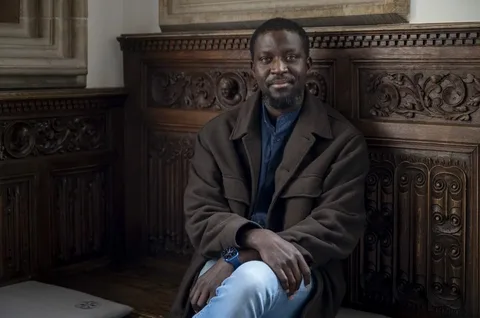

South African music producer and DJ, Maphorisa, has announced that he is stepping away from amapiano, a move that has immediately sparked widespread debate among fans, artists, and industry observers. The announcement, made publicly and without a fixed timeline, has raised questions about the future of one of Africa’s most influential contemporary music genres and the role of one of its most recognisable architects.
DJ Maphorisa, whose real name is Themba Sonnyboy Sekowe, has been a central figure in the rise and global spread of amapiano over the past decade. His decision to distance himself from the genre, even temporarily, has therefore been interpreted by many as more than a personal career adjustment.
The producer has not stated that he is retiring from music entirely. Instead, he has indicated a desire to focus on other sounds, collaborations, and creative directions outside amapiano. This clarification, however, has done little to slow reactions, particularly on social media platforms where the genre’s evolution is frequently debated in real time.
Maphorisa’s role in amapiano’s rise
DJ Maphorisa is widely credited as one of the producers who helped shape amapiano from an underground sound into a mainstream and international genre. Through collaborations with artists, DJs, and vocalists, he played a key role in refining the sound’s structure, production quality, and commercial appeal.
His involvement extended beyond production. Maphorisa was instrumental in building bridges between amapiano and other genres such as house, gqom, afrobeat, and hip-hop. This crossover approach helped introduce amapiano to audiences beyond South Africa and positioned it as a global export.
Over the years, he worked with a wide range of artists, from emerging local talent to established international names. His influence was not limited to hit records but also included mentorship, collaborations, and the promotion of new voices within the scene.
Because of this history, his step back has been interpreted by many fans as a symbolic moment for amapiano itself.

What Maphorisa actually said
In addressing his decision, DJ Maphorisa framed the move as a creative reset rather than a rejection of amapiano. He suggested that he had reached a point where repetition risked stagnation and that exploring other musical directions was necessary for growth.
He did not rule out returning to the genre in the future, nor did he criticise amapiano as a sound. Instead, he emphasised the importance of evolution, both personally and artistically.
This distinction has been lost in some reactions, where the announcement has been framed as an abandonment of the genre. Others have taken his words more literally, seeing the move as a pause rather than a permanent exit.
Fan reactions and divided opinions
The response from fans has been sharply divided. One group views Maphorisa’s decision as a natural progression for an artist with a long career. Supporters argue that creative figures should not be confined to a single genre and that his influence on amapiano is already secure.
Another group sees the move as premature or even harmful. Some fans believe amapiano is still evolving and that the continued involvement of foundational producers is necessary to guide its direction. Others have interpreted his step back as a sign that amapiano has peaked or is losing momentum.
There is also a strand of criticism suggesting that Maphorisa benefited significantly from amapiano’s rise and should continue contributing to its development rather than shifting focus at a time when newer artists are still finding their footing.
These differing perspectives reflect broader tensions within the amapiano community about ownership, credit, and responsibility.
Industry perspectives
Within the music industry, the reaction has been more measured. Producers and artists familiar with long creative cycles have noted that stepping away from a dominant sound can be a strategic decision rather than an emotional one.
Amapiano’s rapid rise has placed intense pressure on its leading figures to consistently deliver hits. This environment can lead to creative burnout, particularly for producers who are heavily in demand. From this perspective, Maphorisa’s move is seen as an attempt to avoid overexposure and creative fatigue.
Some industry observers also point out that amapiano has reached a stage where it no longer depends on a single figure. The genre now has a wide base of producers, DJs, and vocalists who continue to push it forward independently.
The immediate impact of DJ Maphorisa’s step back is symbolic rather than structural. Amapiano continues to dominate club playlists, streaming platforms, and international stages. Its commercial and cultural momentum remains strong.
However, the announcement has intensified existing conversations about the genre’s direction. Questions about innovation, saturation, and longevity have resurfaced, particularly as amapiano becomes more globalised and commercially driven.
For some, Maphorisa’s move is a reminder that genres must evolve or risk creative decline. For others, it highlights the need to protect amapiano’s core identity as it expands beyond its original context.
Maphorisa’s broader career trajectory
DJ Maphorisa’s career has never been limited to a single genre. Before amapiano, he was already established in house music, hip-hop, and pop-oriented production. His collaborations across Africa and beyond have consistently demonstrated an ability to adapt to changing musical landscapes.
Stepping away from amapiano may therefore align with his established pattern of reinvention. Rather than signalling an end, it may represent a transition into a new phase of experimentation.
This context is important in assessing the significance of his decision. While amapiano has become closely associated with his name, it is not the sole foundation of his career.
The debate going forward
The debate sparked by Maphorisa’s announcement is likely to continue, particularly as fans watch his next musical moves. If his future projects succeed outside amapiano, the decision may be retrospectively viewed as strategic. If not, criticism may intensify.
More broadly, the situation has opened space for discussion about how genres grow, who shapes them, and when it is acceptable for key figures to step aside. These questions are not unique to amapiano and have appeared repeatedly across music history.
For amapiano, the moment serves as a test of maturity. A genre that can thrive beyond its pioneers demonstrates depth and resilience.
Attention will now shift to Maphorisa’s next releases and collaborations, as well as how amapiano continues to evolve without his constant presence. Fans and industry players alike will be watching whether his absence creates a noticeable gap or simply confirms that the genre has moved into a new phase.
For now, DJ Maphorisa’s step away stands as both a personal creative decision and a broader cultural moment, one that has forced amapiano’s community to reflect on where the genre has been and where it is heading next.