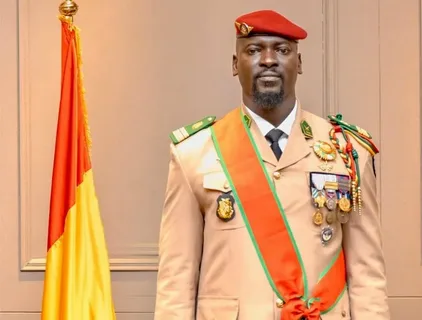
Guinea, a West African nation long viewed as politically volatile, has once again captured regional and global attention. This time, the spotlight is on the election that saw the country’s military junta leader transition into a civilian presidency in an electoral contest overshadowed by an opposition boycott. On the surface, the event may seem like a familiar pattern of entrenched power retaining control. Beneath that surface, however, lies a story of political strategy, institutional fragility and an electorate confronted with constrained choices.
This article explores what really happened in Guinea’s recent election, why it matters beyond the headlines, and what it could mean for the country’s democratic evolution.
When a significant opposition force opts out of an election, the very concept of choice is undermined. That is the core issue facing Guinea today. The junta that seized power in a coup just over a year ago decided to hold elections amid promises of a return to civilian rule. Yet the key opposition parties, citing concerns over fairness, transparency and the integrity of the electoral process, withdrew their candidacies before polling day.
The result was predictable, the junta leader emerging with a commanding majority, in what many observers described as a one-sided contest. For analysts, the boycott was not simply about participation or non-participation. It was a protest against an electoral framework perceived to be skewed, and an indictment of the conditions under which the vote was organised.
This context is crucial because elections are not merely about counting ballots. They are about legitimacy, representation and the willingness of stakeholders to engage in a shared political process.
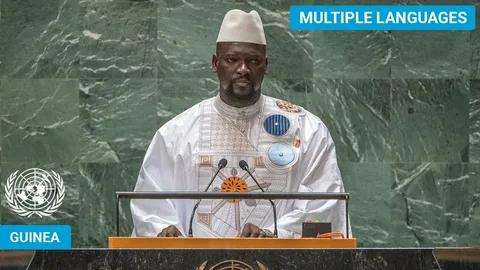
To understand the boycott, it is important to consider the grievances that led to it. Opposition parties in Guinea argued that the electoral conditions were fundamentally unfair. They highlighted concerns over voter registration, the independence of the electoral commission, and limited access to media and public spaces during the campaign period.
Moreover, the opposition questioned the timing of the elections. Many believed that holding a national vote within such a short window after a junta takeover did not allow for the creation of a level playing field. There were calls for a longer transition period, during which democratic institutions could be strengthened and genuine political dialogue fostered.
The boycott was, thus, not merely a refusal to compete. It was a strategic decision aimed at delegitimising an electoral process seen as predetermined. In withdrawing, the opposition sought to send a clear message, that participation under the given circumstances would amount to a validation of injustices they believed were baked into the system.
From the perspective of Guinea’s junta, the decision to proceed with elections despite the boycott was a calculated one. The leadership was under intense domestic and international pressure to demonstrate a return to civilian rule. Holding a presidential election offered a veneer of constitutional order, even if the substance of that order was contested.
There is a long-standing pattern in parts of Africa and beyond, where military rulers use elections as a tool to cement their hold on power while deflecting criticism. By securing a formal electoral mandate, the junta leader now claims the legitimacy of a democratically elected president. Whether that legitimacy is widely recognised, however, remains a subject of debate.
For the ruling authorities, the gamble was that the benefits of showcasing an election outweigh the risks of reduced participation. So far, that calculation appears to have paid off for them domestically. The president now holds the constitutional title and can point to an electoral victory as proof of a popular mandate.
Amid these political machinations sit ordinary Guineans, whose aspirations for stability, services and opportunity are real, even if they feel abstract in the face of chronic instability. Low voter turnout was widely reported, a reflection not only of the boycott but also of a broader sense of disenchantment among the electorate.
This sentiment is not unique to Guinea. Around the world, elections that lack competitive dynamics often struggle to engage citizens. In such contexts, participation becomes a ritual rather than an expression of choice. For many Guineans, the decision to vote or abstain was shaped not just by political allegiances but by a sense of futility about a process perceived to lack fairness.
Yet it would be simplistic to conclude that ordinary citizens are indifferent. Many are deeply invested in the future of their nation, but they find themselves constrained by political realities over which they have limited influence.
Guinea’s election has drawn commentary from neighbouring countries and international observers. While some have welcomed the return to a constitutional timeline, others have echoed concerns about inclusivity and legitimacy.
This mixed response highlights a deeper tension in international diplomacy. On one hand, there is a desire to encourage democratic transitions; on the other, there is an acknowledgement of realpolitik, where engagement with incumbent authorities is necessary for stability, aid, and security cooperation.
For regional bodies, the situation poses a difficult balance. Condemning the process outright could isolate Guinea further, while tacit acceptance may risk normalising flawed elections. What is clear is that Guinea’s path will not be shaped solely by its internal actors; it will also be influenced by the priorities and pressures of external partners.
The immediate aftermath of the election is likely to see the new president consolidating power. That will involve forming a government, appointing key officials, and setting policy priorities. How inclusive these appointments are will be an early indicator of whether the leadership is serious about bridging political divides or merely solidifying control.
Institutionally, the challenge will be to strengthen democratic mechanisms that go beyond a single vote. This includes independent judiciaries, credible electoral commissions, and forums for political dialogue. Without these, elections risk becoming cyclical reenactments of the same power imbalances.
Socially, there is a need for civic engagement that transcends party politics. For Guinea to move forward, there must be spaces where citizens can express their views, hold leaders accountable, and contribute to national discourse in meaningful ways.
Economically, the government will be expected to address pressing issues such as poverty, unemployment and infrastructure. Delivering tangible improvements in people’s lives may help mitigate political dissatisfaction, but only if such efforts are perceived as genuine and equitable.
Guinea’s situation underscores a broader question facing many emerging democracies: can elections alone build a democratic culture? Elections are a necessary component of democracy, but they are not sufficient. They must be embedded within a larger ecosystem of accountability, transparency and inclusive governance.
When significant portions of the political spectrum are excluded from a process, the result is not a snapshot of national will, but a fractured image that leaves many voices unheard. In such circumstances, the legitimacy of leaders is contested not only by opposition elites but also by citizens who feel their interests are unrepresented.
Guinea’s election is, therefore, a reminder that democracy is not just about the act of voting, but about the conditions that make voting meaningful.
As Guinea embarks on this new chapter, the lessons extend beyond its borders. The dynamics observed here mirror challenges faced by nations striving to reconcile power, participation and legitimacy. For observers, analysts and citizens alike, the importance lies in understanding the nuances of political processes, not just their headlines.
Guinea’s journey will continue to evolve. Whether this election marks a turning point towards inclusive governance, or another episode in a cycle of constrained politics, depends on the choices of leaders and citizens alike. What is certain is that the real story of Guinea’s democratic future is still being written, one decision at a time.