

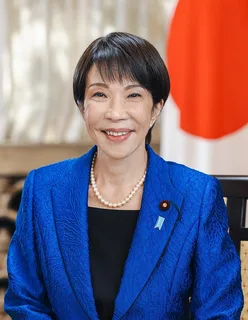
Japan’s Prime Minister Sanae Takaichi has consolidated her political authority with a commanding victory in the country’s snap general election, securing one of the largest parliamentary majorities in recent history and cementing conservative control of the lower house of the National Diet. The result, confirmed by early projections and official counts, provides her ruling bloc with a powerful legislative mandate.
Takaichi called the snap election in January, just three months after taking office as leader of the Liberal Democratic Party (LDP) and becoming Japan’s first female prime minister. Her decision to seek a fresh mandate was driven by a combination of her growing popularity among voters, internal political dynamics within the LDP, and urgent national concerns over economic stagnation and regional security.
Election Outcome And Parliamentary Majority
Preliminary results and broadcaster projections showed that Takaichi’s LDP alone secured at least 316 seats out of the 465 in the House of Representatives, the lower house of Japan’s parliament. When combined with seats won by its coalition partner, the Japan Innovation Party (JIP), the ruling alliance is expected to hold around 350 seats or more, a two-thirds “supermajority”.
The supermajority grants Takaichi’s government extensive legislative authority, including the ability to override objections in the upper house and significantly shape Japan’s legal and policy framework with minimal resistance from the opposition.
Analysts say the scale of the victory reflects strong voter alignment with Takaichi’s platform, which blends economic relief measures with a more assertive stance on national defence and security.
Historical Context And Political Background
Sanae Takaichi, aged 64, became leader of the LDP after winning the party’s leadership election in 2025, defeating prominent rival Shinjirō Koizumi, and earning broad support from conservative party factions. Her rise to the premiership marked a historic moment, making her the first woman to serve as Japan’s prime minister, a breakthrough in a political landscape traditionally dominated by male leaders.
Her path to the top was not without turbulence. Prior to her leadership, the LDP had experienced significant setbacks, including the loss of its longstanding coalition majority with the centrist Komeito Party. Komeito’s withdrawal earlier in 2025 eroded the LDP’s parliamentary strength and contributed to political uncertainty, prompting Takaichi to rebuild the party’s core support base.
Once named party leader and prime minister, Takaichi moved quickly to define her political agenda. She campaigned on measures to ease the cost-of-living pressures afflicting many households, including a pledge to suspend the consumption tax on food for two years, and a continuation of expansive fiscal stimulus aimed at reinvigorating economic growth.
Policy Platform And Election Messaging
The Conservative campaign in 2026 focused on several core themes that resonated with voters weary of sluggish economic growth and external geopolitical threats. Japan’s economy grew at a modest rate in recent years, and many households struggled with inflation and stagnant wage growth. Takaichi’s pledges to provide tangible relief, especially through a consumption tax suspension and direct support measures, were central to her appeal.
On national security, Takaichi has advocated strengthening Japan’s defence capabilities in response to escalating tensions in the region, particularly regarding China and North Korea. Her remarks suggesting a more assertive posture, including potential reinterpretation of Japan’s post-war pacifist principles, underscored her campaign’s emphasis on protecting national interests.
Her platform also included proposals to tighten immigration policies and push for constitutional revisions to formally acknowledge Japan’s Self-Defence Forces as a conventional military, measures that align with a more robust national security stance and appeal to conservative voters.
Opposition And Political Landscape
The main opposition, led by the Centrist Reform Alliance (an alliance including the Constitutional Democratic Party and defectors from Komeito), suffered heavy losses in the election. Exit polls and early results indicated that opposition representation in the lower house fell steeply, with many incumbent lawmakers defeated amid the Conservative surge.
Opposition leaders acknowledged the scale of the defeat and signalled a period of introspection as parties recalibrate strategies for future elections. However, the depth of Conservative support suggests a re-ordering of Japan’s political landscape, potentially diminishing the influence of centrist forces in parliament for years to come.
Voter Dynamics And Turnout
Japan’s February election was held under challenging weather conditions, including heavy snowfall across several regions, which some analysts suggested might dampen turnout. Nevertheless, the overall vote reflected significant engagement with the Takaichi platform, particularly among younger voters who appeared drawn to her direct style of leadership and promises of economic relief.
Analysts noted that Takaichi’s communication strategy, including active use of social media and personalised campaigning, helped broaden her appeal beyond traditional conservative bases. Voters under the age of 30, in particular, were reported to lean toward her message of economic support and national strength.
Implications For Governance And Policy
With an unprecedented parliamentary majority, Takaichi’s government now has the flexibility to pursue major legislative initiatives without the need for broad cross-party consensus. This includes potential constitutional revision efforts, which have long been debated in Japanese politics. A two-thirds majority in the lower house is a key threshold for initiating changes that could redefine the role of Japan’s military and defence policies.
On economic policy, her victory is likely to solidify commitments to fiscal stimulus measures, including tax incentives for households and businesses, and expanded public investment. However, critics warn that such policies, particularly the extended suspension of consumption tax, could exacerbate Japan’s already high public debt burden unless paired with sustainable growth strategies.
On foreign relations, her hardline stance, especially regarding Taiwan and regional security, may complicate ties with neighbouring countries and with Beijing. China has already expressed concerns about Japan’s perceived shift toward a more assertive defence posture, and the election outcome could deepen diplomatic tensions.
Future Political Outlook
With this commanding victory, Takaichi’s mandate extends beyond the immediate legislative agenda. It positions her as a defining figure in Japanese politics and signals a shift toward a more conservative policy era. How she navigates economic challenges, demographic pressures, and complex regional geopolitics will test both her leadership and the depth of public support that propelled her to power.
Her government is expected to remain stable through the next electoral cycle, and unless there is a major political upheaval or public backlash, Takaichi’s influence on Japan’s domestic and international direction is likely to be significant and long-lasting.