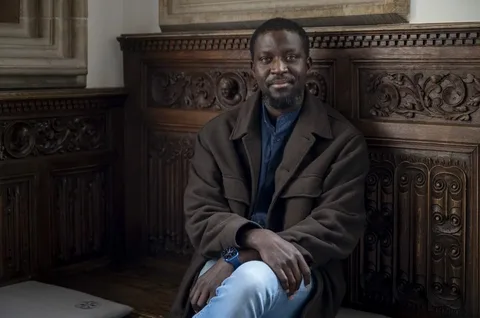
Ghanaian contemporary artist Ibrahim Mahama has made history as the first African to claim the number-one spot on ArtReview’s annual Power 100 list, a global ranking that identifies the most influential figures shaping contemporary art. His rise to the top is more than a personal achievement; it represents a shift in how the global art world understands power, influence, and creative impact.
ArtReview’s Power 100 list has long been considered a barometer of authority in the contemporary art ecosystem. It reflects not just who produces acclaimed art, but who sets the agenda, builds the institutions, influences discourse, and shapes the future. For years, the list was dominated by Western curators, museum directors, elite collectors, and artists from Europe and North America. Mahama’s appearance at the very top signals that the geography of global influence is changing, with voices from Africa, Asia, and the Middle East beginning to occupy space that was once tightly controlled by a familiar few.
Ibrahim Mahama’s recognition is the product of a career defined by ambition, experimentation, and an unwavering commitment to community. Born in 1987 in Tamale, northern Ghana, he grew up far from the global art capitals that traditionally incubate world-renowned artists. Instead, his early environment, shaped by trade, labour, and the socio-economic realities of Ghanaian life, became central to his artistic language. His signature installations, often constructed using repurposed materials such as jute sacks, textiles, and salvaged objects, serve as both artistic expression and social commentary. They tell stories of labourers, markets, migration, exploitation, and resilience. They also highlight the ways Africa is entangled in global economic systems that continue to echo colonial histories.
Mahama’s work is monumental in scale but grounded in deeply human narratives. Many of his installations involve communal participation: hundreds of hand-stitched sacks brought together by local artisans, weavers, traders, and students. This collaborative method is not merely symbolic. It demonstrates Mahama’s belief in art as a collective undertaking, something built through shared labour, shared memory, and shared identity. His approach challenges the conventional image of the solitary artist and instead elevates community craft as part of contemporary global art practice.
But what truly sets Mahama apart and what ultimately pushed him to the top of the Power 100 list is not only the art he creates but also the ecosystems he builds. Over the past decade, his most transformative work has involved the creation of cultural hubs in northern Ghana, spaces designed to support local artists, encourage experimentation, and make contemporary art accessible to communities often left out of elite cultural circles. Institutions such as the Savannah Centre for Contemporary Art (SCCA), Red Clay Studio, and Nkrumah Volini have become symbols of what art infrastructure can look like in places far from traditional cultural capitals.
These centres host exhibitions, workshops, research projects, and community events. They provide platforms for Ghanaian and African artists who may not otherwise have access to global networks. More importantly, they anchor art within local contexts, ensuring that inspiration and opportunity no longer flow in one direction, from the West to the rest of the world, but circulate organically within Africa itself. Mahama’s commitment to reinvesting his success back into his community is a form of leadership that resonates well beyond national borders.
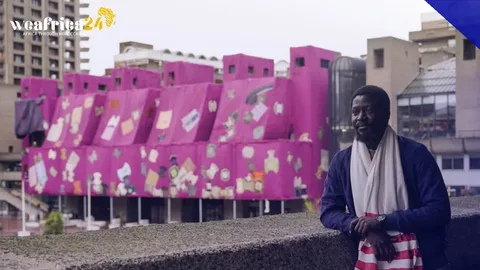
His recognition also aligns with broader transformations in the art world. Increasingly, influence is measured not only by the market value of an artist’s work or their representation in elite galleries, but by their ability to shift discourse, shape public imagination, and create lasting structures of empowerment. Mahama’s work ticks all these boxes. His installations have been exhibited internationally, from biennials to major museums, and his ideas about labour, material history, and collective memory have pushed global audiences to reconsider how art engages with socio-economic realities.
The 2025 Power 100 list also reflects the art world’s growing attentiveness to institutions and cultural leaders outside Europe and North America. Alongside Mahama, several influential figures from the Middle East, Africa, and Asia appear within the top ranks. Their presence signals that the global centre of gravity in contemporary art is shifting. The rise of new collectors, new museums, new cultural foundations, and new artistic movements outside the West is reshaping how influence is defined—and who gets to define it. Mahama’s achievement is therefore both symbolic and substantive: an indication that the global art system is finally beginning to recognise the depth, originality, and infrastructural impact of voices that historically operated on the margins.
Despite the magnitude of this achievement, Mahama’s response has been characterised by humility. He has described the moment as a reminder of how far Ghanaian art has come and how much potential remains untapped across the African continent. For him, the recognition is not merely a personal honour but a gateway to further possibilities for artists who have long felt unseen or unheard in mainstream global conversations.
His story offers a powerful message about the future of contemporary art. Influence is no longer the exclusive domain of traditional art capitals. It can emerge from community workshops in Tamale, from conversations with market women, from the hands that stitch textiles together beneath the sun, and from places where art is not separated from everyday life but intimately woven into it. Mahama’s ascent to the top of the Power 100 list illustrates how art built on authenticity, collaboration, and social consciousness can resonate across borders and redefine global standards.
As his career continues to evolve, Ibrahim Mahama stands not only as a visionary artist but also as a builder of systems and a catalyst for change. His recognition as the most influential figure in the art world marks a milestone for Ghana, for Africa, and for every region fighting for rightful representation in global cultural spaces. It is a moment that celebrates creativity, resilience, and the power of art to reshape how the world sees itself and who gets to lead that conversation.