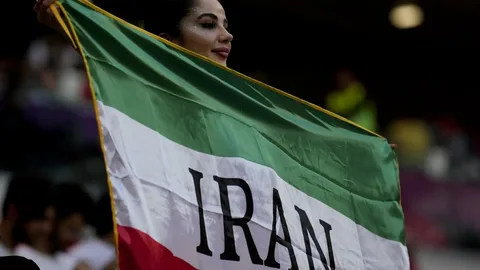
On 4 February 2026, the Islamic Republic of Iran officially announced a monumental shift in its domestic policy by formally granting women the right to obtain motorcycle licences. This decision marks the end of a decades long legal struggle and a period of profound social ambiguity that had effectively barred female riders from the road.
The announcement, which was carried by the state linked Ilna news agency and various international outlets, signifies a transformative moment for gender equality and mobility in the country. For years, women in Iran have navigated a complex landscape of unofficial bans and restrictive interpretations of traffic laws, but this new resolution provides the legal clarity many have risked their safety to demand.
The shift is not merely a technical change in transport regulations; it is a symbolic victory for a generation of women who have sought greater autonomy in public spaces. The move follows a period of significant social pressure and follows the government’s efforts to address long standing grievances regarding personal freedoms. By providing a formal pathway for women to operate motorcycles and scooters, the Iranian authorities are finally acknowledging a reality that has been growing on the streets of Tehran and other major cities for years.
The Legal Framework And Official Resolution
The formalisation of this right was solidified when Iran’s First Vice President, Mohammad Reza Aref, signed a resolution aimed at clarifying the national traffic code. This document, which received cabinet approval in late January 2026, serves as the definitive legal instrument that mandates the traffic police to treat female applicants with the same administrative procedures as their male counterparts. Specifically, the resolution instructs the Law Enforcement Command of the Islamic Republic, known as FARAJA, to establish the necessary infrastructure for testing and licensing women.
Historically, the primary obstacle was Article 20 of the Law on Traffic Violations. This specific article mentions that the authority to issue motorcycle licences is granted for “men.” For decades, the Iranian judiciary and police forces interpreted this phrasing as an implicit ban on women. While the law did not explicitly state that women were forbidden from riding, the silence on female applicants allowed authorities to systematically refuse to process their paperwork.
The new 2026 resolution clarifies that this “silence” should no longer be used as a tool of exclusion. Under the new mandate, traffic police are now obliged to provide practical training to female applicants, organise examinations under direct police supervision, and issue official motorcycle driver’s licences to those who qualify.
The Long Road To Reform
The journey toward this legislative change has been defined by persistent activism and legal challenges. One of the most notable precursors to this decision was a 2019 ruling by an administrative court in Isfahan. The court had ruled in favour of a woman who sued the police for refusing to issue her a licence, stating that there was no religious or legal reason to bar women from riding. However, that victory was short lived, as the police and higher judicial authorities refused to implement the ruling nationwide, maintaining that legislative change from the parliament or a cabinet decree was necessary.
The push for reform gained uncontrollable momentum following the 2022 “Woman, Life, Freedom” movement, which was sparked by the tragic death of Mahsa Amini in police custody. While those protests were initially focused on the mandatory hijab laws, they evolved into a broader demand for the dismantling of all gender based restrictions.
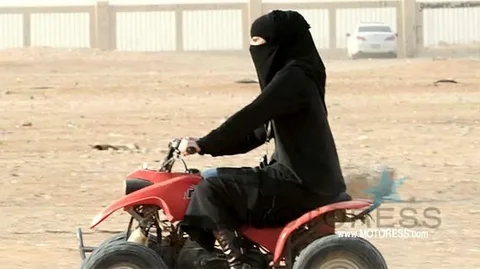
In the years following 2022, Iranian women increasingly took to their motorcycles and scooters in an act of civil disobedience. Despite the risk of having their vehicles confiscated or facing fines, the sight of women weaving through Tehran’s notorious traffic became increasingly common. This persistent defiance made it difficult for the government to continue enforcing an unenforceable ban, eventually leading to the legislative discussions of 2025 and the final decree in 2026.
Safety, Insurance, And The Legal Grey Area
Before this official change, women who chose to ride motorcycles lived in a dangerous legal “grey area.” Because they could not obtain a valid licence, they were also unable to secure vehicle insurance. This created a perilous situation where, in the event of an accident, a female rider could be held legally responsible for all damages and medical costs, regardless of who was at fault. Even in cases where the woman was the victim of another driver’s negligence, her lack of a licence often disqualified her from receiving insurance payouts or seeking legal redress.
The 2026 resolution directly addresses this systemic vulnerability. By allowing women to hold official licences, the government has cleared the path for insurance companies to offer coverage to female riders. This is expected to significantly improve road safety, as women will now have access to formal training programmes rather than learning to ride in secret. Furthermore, the decree encourages the Ministry of Industry, Mine and Trade to support the manufacturing of safety gear specifically designed for women, as well as the promotion of electric motorcycles, which are seen as a more accessible and environmentally friendly option for urban commuting.
Practical Implementation And Training Centres
To ensure the transition is smooth and culturally compliant within the existing framework of the Islamic Republic, the government has outlined specific guidelines for the training process. Zahra Behrouz Azar, the Deputy for Women and Family Affairs, has noted that the police have already established the necessary procedures to begin training. A key component of this plan is the use of female instructors and officers to conduct the practical courses and examinations.
The establishment of female only training centres or dedicated hours at existing facilities is intended to provide a comfortable environment for new riders. This approach mirrors other sectors in Iran where gender segregated spaces are used to facilitate women’s participation in activities that were previously male dominated. While some activists argue that such segregation is unnecessary, many acknowledge that it is a practical compromise that allowed the bill to pass through the more conservative branches of the government. The goal is to ensure that every woman, regardless of her background, has the opportunity to learn the mechanical and safety skills required to navigate the country’s challenging roads.
Economic Impact And Urban Mobility
Beyond the social implications, the decision to allow women to ride motorcycles is expected to have a tangible economic impact. In cities like Tehran, Mashhad, and Isfahan, motorcycles are an essential tool for navigating dense traffic and overcoming the limitations of public transport. For many women, particularly those in the gig economy or working as independent couriers, the ability to legally operate a motorcycle opens up new avenues for employment.
The rise of delivery apps in Iran has created a massive demand for couriers, a field that has been almost exclusively male due to the licensing restrictions. With the new law in place, thousands of women can now enter the delivery workforce, providing them with a much needed source of income during a time of economic volatility. Additionally, the move is expected to alleviate pressure on the public transport system and reduce the number of cars on the road, contributing to a decrease in the air pollution that frequently plagues Iranian metropolitan areas.
| Key Feature of the 2026 Resolution | Implementation Detail |
| Legal Basis | Cabinet resolution signed by Vice President Mohammad Reza Aref |
| Regulatory Body | Traffic Police (FARAJA) and Ministry of Interior |
| Training Requirement | Mandatory practical courses with female instructors where possible |
| Licence Type | Standard motorcycle driver’s licence valid for all two-wheelers |
| Insurance Access | Full eligibility for third-party and comprehensive vehicle insurance |
| Safety Standards | Compulsory use of helmets and promotion of ABS-equipped vehicles |
Public Reaction And Future Outlook
The reaction within Iran has been a mixture of celebration and cautious optimism. On social media, many Iranian women have shared photos of their motorcycles, expressing relief that they no longer have to hide their vehicles or fear the police. For these women, the motorbike represents more than just a mode of transport; it is a tool of independence. Saina, a 33 year old resident of Tehran who has been riding a scooter for several years, noted that while the legal change is a positive step, it is one of many freedoms that women are still striving for.
International observers have welcomed the move as a sign of progress, though many human rights organisations point out that the change comes against a backdrop of continued social tension. The Iranian government has acknowledged that recent unrest, which included nationwide protests in early 2026, played a role in accelerating certain reforms as the state seeks to address public dissatisfaction. While the motorcycle licence issue is specific, it is part of a larger, ongoing dialogue about the role of women in Iranian society and the boundaries of personal freedom.
As the first licences are issued to women in the coming weeks, the focus will shift to how the law is enforced on the ground. There are still questions regarding the mandatory dress code for female riders. While the law now allows them to ride, they must still adhere to national modesty standards, which include wearing a headscarf and modest clothing. However, with the integration of safety helmets, which naturally cover the head, many see this as a practical resolution to the “hijab on a bike” debate.