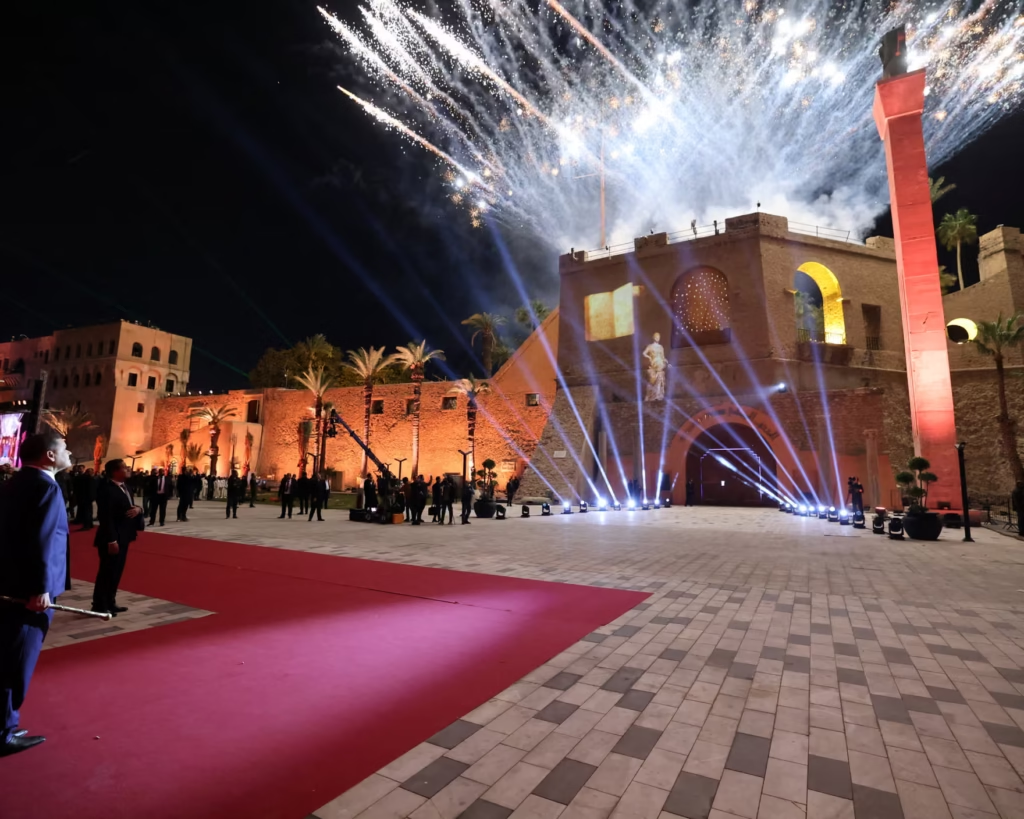
Libya has taken a significant symbolic step toward cultural and national renewal with the reopening of its National Museum in Tripoli, an institution long closed due to years of conflict and instability. The reopening marks a rare moment of continuity in a country still navigating political fragmentation, security challenges, and economic uncertainty, and signals a renewed emphasis on heritage as a unifying national force.
The National Museum, which houses artifacts spanning thousands of years of Libyan history, reopened its doors to officials, cultural workers, and invited guests following extensive restoration and security upgrades. The move comes after more than a decade in which the museum remained largely inaccessible to the public, its collections protected behind sealed galleries as fighting engulfed parts of the capital.
Officials described the reopening as both a cultural milestone and a national statement. Libya’s Ministry of Culture said the museum’s return reflects a growing recognition that cultural institutions play a central role in post-conflict recovery, offering shared spaces for memory, identity, and dialogue in a society still divided by years of unrest.
For much of the past decade, Libya’s cultural sector has operated under severe constraints. Armed clashes, political rivalries, and the breakdown of state institutions placed museums, archives, and archaeological sites at risk. The National Museum, located in a strategic area of Tripoli, was repeatedly threatened by nearby violence, forcing staff to suspend public access and focus primarily on safeguarding collections.
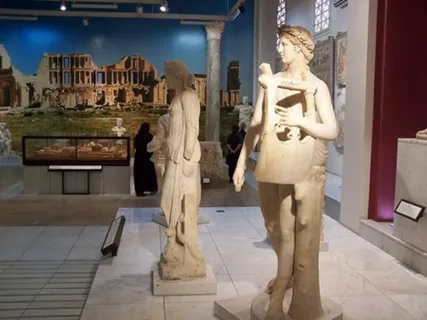
The museum’s holdings reflect Libya’s long and complex history as a crossroads of civilisations. Exhibits include prehistoric tools, artefacts from ancient Berber communities, and remnants of Phoenician, Greek, Roman, and Islamic cultures. Together, they trace a narrative that predates modern political divisions and underscores Libya’s historical role in regional trade, culture, and governance.
During the years of closure, museum staff worked under difficult conditions to preserve these collections. Power shortages, limited funding, and security concerns complicated conservation efforts. Some artefacts were relocated to secure storage, while others remained on-site under protective measures designed to minimise damage and theft. Cultural officials have acknowledged that not all losses could be prevented but say the reopening demonstrates resilience and continuity despite these challenges.
At the reopening ceremony, government representatives emphasised that the museum belongs to all Libyans, regardless of political affiliation or regional identity. In a country where rival administrations have competed for legitimacy, cultural heritage has increasingly been framed as neutral ground, capable of fostering a sense of shared ownership and national belonging.
The reopening also reflects a broader effort to restore public institutions that serve civilian life rather than political authority. While infrastructure projects and security reforms have dominated much of Libya’s reconstruction discourse, cultural leaders argue that restoring museums, libraries, and heritage sites is equally important to rebuilding social trust and confidence.
The newly reopened sections of the museum feature restored galleries and reorganised exhibits designed to present Libya’s history as a continuous and interconnected story. Curators have adopted an approach that emphasises cultural exchange and coexistence across centuries, rather than focusing on isolated periods or dominant powers. Officials say this framework is intended to encourage visitors to see Libya’s past as shared and inclusive.
Security remains a priority. Access to the museum is currently controlled, with limited visitor numbers and heightened monitoring to ensure the safety of both the public and the collections. Authorities described the reopening as a phased process, with additional galleries expected to open gradually as restoration work continues and operational capacity expands.
Despite these limitations, the reopening has been welcomed by cultural professionals who have long advocated for greater protection and visibility for Libya’s heritage. Museum staff described the event as a turning point after years in which their work was largely invisible and focused on crisis management rather than public engagement.
Education is expected to be a central focus of the museum’s next phase. Plans include partnerships with schools and universities, guided tours for students, and research access for academics. Officials believe that reconnecting younger generations with the country’s history is essential to countering years of disruption in education and civic life.
The reopening has also drawn attention from international observers, many of whom view the revival of cultural institutions as an indicator of gradual stabilisation. Libya’s cultural heritage has long attracted global scholarly interest, and authorities have said they hope the museum’s reopening will eventually support broader cultural cooperation and professional exchange.
At the same time, officials acknowledged that the museum’s return does not signal an end to Libya’s difficulties. The country continues to face political deadlock, economic strain, and sporadic security incidents. Critics have questioned whether cultural projects should take precedence amid such challenges. Government representatives have responded by arguing that cultural recovery is not a luxury but a foundation for long-term stability.
They point to the role of shared history in fostering dialogue and reducing polarisation. By presenting a narrative that predates contemporary conflict, the museum offers a space where Libyans can engage with their identity beyond recent divisions. Cultural experts say this approach has been effective in other post-conflict societies seeking to rebuild trust and social cohesion.
The reopening also carries a message about preservation. Libya has struggled with the illicit trafficking of antiquities, a problem exacerbated by years of weak enforcement and insecurity. By restoring the National Museum and reasserting state oversight of heritage, authorities aim to strengthen protection measures and signal a commitment to safeguarding cultural assets.
For many Libyans, the museum’s reopening has emotional significance. It represents the survival of something tangible from a period marked by loss and uncertainty. Visitors attending the reopening spoke of pride and cautious hope, describing the museum as a reminder that Libya’s story did not begin with conflict and will not end with it.
The government has indicated that similar restoration efforts are planned for other cultural institutions across the country, though funding and security constraints remain major obstacles. Several regional museums and archaeological sites are still damaged or inaccessible, highlighting the scale of work that lies ahead.
As the National Museum resumes its role in Tripoli’s cultural life, it stands as both a symbol of endurance and a practical step toward institutional recovery. Its reopening suggests that Libya is beginning, however cautiously, to invest again in spaces that serve memory, education, and public life.
In a nation still searching for political consensus, the revival of its National Museum offers a rare point of agreement. By looking to its past, Libya is attempting to build a future rooted not only in political negotiation, but in shared history, cultural continuity, and the preservation of identity.
-conflictDon’t Miss