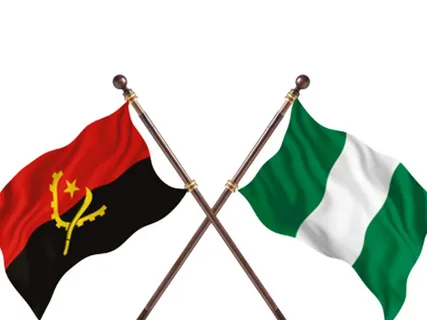
Nigeria and Angola have signed a visa exemption agreement aimed at easing travel between both countries and strengthening diplomatic and economic relations. The agreement was concluded at the governmental level and applies to specific categories of passport holders, rather than a blanket visa-free arrangement for all citizens.
The deal represents a formal step toward deeper cooperation between two of Africa’s largest economies and oil-producing nations, and forms part of broader bilateral engagements covering trade, investment, energy, and regional diplomacy.
What was signed
The visa exemption agreement allows eligible passport holders from Nigeria and Angola to enter the other country without the requirement of a visa for short stays. The exemption applies to holders of diplomatic and official passports, in line with standard international practice for similar bilateral arrangements.
The agreement does not remove visa requirements for holders of ordinary passports. Nigerian and Angolan citizens travelling for tourism, work, study, or long-term residence will still be required to apply for visas through the appropriate immigration channels.
Government officials from both countries have described the agreement as a confidence-building measure designed to facilitate official travel, reduce administrative barriers, and support closer state-to-state engagement.
Officials involved and signing context
The agreement was reached under the administrations of Bola Ahmed Tinubu, President of Nigeria, and João Lourenço, President of Angola.
Senior officials from Nigeria’s Ministry of Foreign Affairs and Angola’s Ministry of External Relations were involved in negotiating and finalising the terms. The signing followed a series of diplomatic engagements between both countries, including bilateral meetings and multilateral summits attended by their leaders.
Both governments have confirmed that the agreement will take effect following the completion of internal ratification processes and formal notification between the two states.
What the visa exemption covers
Under the terms of the agreement, eligible travellers may enter the host country without a visa for short official visits, subject to immigration regulations, entry conditions, and permitted length of stay.
The exemption does not grant the right to work, establish residence, or engage in commercial activity beyond the scope of official duties. Immigration authorities in both countries retain the right to deny entry on security, health, or legal grounds.
The agreement is reciprocal, meaning the same conditions apply equally to Nigerian and Angolan eligible passport holders.
Why the agreement matters
Although limited in scope, the visa exemption agreement carries symbolic and practical significance. It signals a strengthening of political trust between Nigeria and Angola and reflects a shared interest in reducing friction in official engagements.
Both countries play influential roles in African politics and regional economic discussions. Nigeria is West Africa’s largest economy, while Angola is a major player in Southern Africa and one of the continent’s top oil producers.
By simplifying travel for government officials and diplomats, the agreement is expected to improve coordination on bilateral projects, regional security, energy cooperation, and African Union initiatives.

Diplomatic and economic background
Nigeria and Angola have maintained diplomatic relations for decades, but bilateral engagement has often been described as underdeveloped relative to the size and potential of both economies.
Recent years have seen renewed efforts to strengthen ties, particularly in the areas of energy cooperation, trade diversification, and investment. Both countries are members of the Organisation of the Petroleum Exporting Countries and have shared interests in oil production policy, pricing stability, and energy transition discussions.
The visa exemption agreement is viewed as part of a broader attempt to remove non-tariff barriers that have historically limited interaction between African states.
Impact on ordinary passport holders
Despite public interest, the agreement does not currently apply to holders of ordinary Nigerian or Angolan passports. Travellers using standard passports must continue to obtain visas before travelling.
However, officials have indicated that the agreement could serve as a foundation for future discussions on broader visa facilitation measures, including simplified application processes or expanded categories of exemption.
For now, any suggestion that Nigerians or Angolans can travel visa-free to the other country without restriction would be inaccurate.
Relation to Nigeria’s broader visa policy
Nigeria has in recent years pursued reforms aimed at improving its visa regime, including the expansion of visa-on-arrival eligibility and digitisation of immigration processes. These reforms are designed to attract investors, ease business travel, and improve Nigeria’s image as a destination for foreign engagement.
The agreement with Angola fits within this wider policy direction, although it remains focused on official travel rather than public mobility.
Nigeria has signed similar visa exemption agreements with several African and non-African countries, primarily covering diplomatic and official passport holders.
Angola’s approach to mobility and diplomacy
Angola has also taken steps to reform its visa policies, including the introduction of visa-free entry for citizens of selected countries and the simplification of tourist and business visa procedures.
The country has sought to reposition itself as more open to international engagement following years of relative isolation. Strengthening ties with major African economies such as Nigeria aligns with this strategy.
Angolan authorities have described the visa exemption agreement as a practical tool for deepening cooperation and reducing bureaucratic delays in official engagements.
Regional and continental implications
The agreement comes amid ongoing discussions about intra-African mobility under the African Continental Free Trade Area framework. While the AfCFTA focuses primarily on trade, free movement of people remains a key long-term objective for many African governments.
Visa exemption agreements between individual countries are often seen as incremental steps toward broader regional mobility, even when initially limited in scope.
Nigeria has historically taken a cautious approach to free movement agreements, balancing economic openness with domestic security and labour market considerations.
What happens next
The agreement will become operational once both countries complete their ratification procedures and issue implementation guidelines to immigration authorities.
Eligible travellers will be required to comply with entry requirements, including valid passports, official documentation, and adherence to permitted duration of stay.
Both governments are expected to issue public notices clarifying the effective date and operational details to prevent misinformation or misinterpretation by travellers.
Public reaction and clarification needs
The announcement has generated public discussion, particularly among Nigerians who often face restrictive visa regimes when travelling abroad. Clarification from officials has been necessary to address misconceptions about the scope of the agreement.
Authorities have emphasised that while the agreement is an important diplomatic milestone, it should not be interpreted as a general visa waiver for the public.
Clear communication is expected to continue as implementation begins, to ensure that travellers understand who qualifies and under what conditions.
The visa exemption agreement between Nigeria and Angola represents a measured but meaningful step in bilateral relations. By easing official travel, both countries aim to improve coordination, deepen trust, and support wider diplomatic and economic objectives.
While limited to diplomatic and official passport holders, the agreement reflects a shared recognition of the need to reduce administrative barriers within Africa. Its long-term significance will depend on whether it leads to broader mobility arrangements and tangible cooperation outcomes.
For now, the deal stands as a verifiable and formal commitment by two major African states to strengthen engagement through practical diplomatic measures.