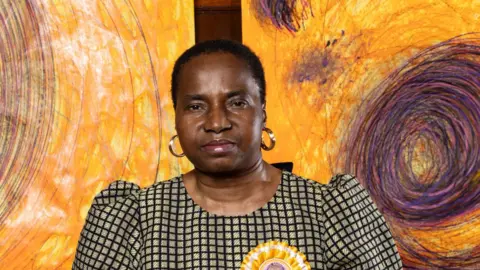
The 2025 Turner Prize ceremony delivered a groundbreaking moment for the global art community as British-Nigerian artist Nnena Kalu became the first artist with a learning disability to win the UK’s most prestigious contemporary art award. Her historic win, announced in Bradford during its tenure as the UK City of Culture, has already been described as a cultural turning point, one that challenges long-standing assumptions about who gets to be seen, supported, and celebrated in the mainstream art world.
For decades, the Turner Prize has been known for spotlighting bold, thought-provoking artistic voices. Yet 2025 stands out not because the award followed a new direction, but because the art establishment finally broadened its definition of excellence in a way many advocates had long hoped for. Kalu, whose work spans intense sculptural installations and expressive drawing forms built through repetitive, meditative gestures, did not win as a symbol or token; the jury emphasised that she won because her art was the strongest, most compelling presentation of the year.
Her victory marks a decisive moment for inclusivity, not through charity or sentiment, but through recognition of genuine artistic mastery.
For many across the UK and beyond, Kalu’s recognition represents far more than a prestigious award. It carries the weight of decades of conversation about accessibility, opportunity, and the often-invisible barriers that neurodiverse and learning-disabled artists face when seeking visibility in major institutions.
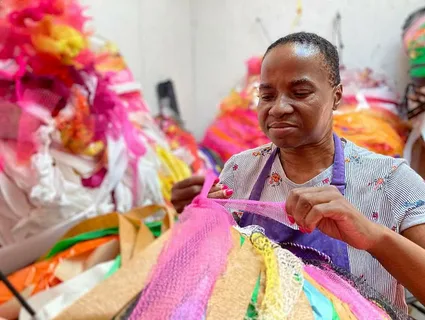
Born in Glasgow in 1966 to Nigerian parents, Kalu has spent over two decades developing a distinctive visual language marked by intensity, motion, and layered materials. Her practice involves building large-scale sculptures from everyday items like tape, fabric, rope, cling film, and repurposed plastics, wrapped, bound, and intertwined through repetitive hand movements. Observers often describe her works as swirling forms or cocoon-like masses that seem to pulse with energy. The physicality of her process is inseparable from the final result: each sculpture is a record of bodily rhythm, persistence, and emotional expression.
Her artistic journey began to crystallise in the late 1990s when she started working with an organisation that supports artists with learning disabilities. For years, she quietly built a meaningful career, exhibiting in the UK and abroad, and steadily gaining recognition for her immersive and emotionally charged installations. But despite her talent, barriers persisted; opportunities within mainstream institutions often seemed out of reach, echoing a broader systemic pattern that many disabled artists encounter.
The Turner Prize jury’s decision, therefore, places her squarely at the centre of contemporary art’s most influential conversations. It is not only a celebration of her individual achievement but also a symbol of overdue change.
The Winning Exhibitions
Kalu was nominated for her contributions to two major exhibitions in Europe:
- A dynamic exploration of sculptural processes displayed in Liverpool.
- A commissioned series for an international contemporary art biennial, where her installations were praised for their sheer presence and sensory impact.
Her work stood out for its rawness, physicality, and deeply human resonance. Critics repeatedly noted the way her installations transform space, demanding interaction and emotional attention from anyone who encounters them. The Turner Prize jury highlighted how her pieces challenge conventional expectations of sculpture and drawing, blending the two until they are almost indistinguishable.
A Shift in the Art World’s Perspective
The Turner Prize has often been a barometer of cultural and artistic direction in the UK. This year’s decision signals a shift toward widening the platform for artists who previously existed at the margins of institutional acceptance. The prize’s chair and other members of the judging panel emphasised that Kalu’s win should not be viewed through a narrow lens of disability representation alone. Instead, they described it as recognition of an artist whose approach expands the possibilities of contemporary art.
Her process-driven works are grounded in rhythm and repetition, an approach that has been described as both deeply personal and universally accessible. These forms of expression disrupt the art world’s tendency to privilege conceptual interpretation over sensory experience. For many, it feels fitting that such a bodily, emotive form of art was the one to finally shatter a longstanding barrier.
The award also underscores a changing attitude toward neurodiversity. For decades, neurotypical standards quietly governed the types of communication, expression, and artistic narratives that institutions deemed acceptable or “serious”. Kalu’s win directly challenges this tradition, validating creative expressions that fall outside the norms of linear storytelling or conceptual discourse. In doing so, it opens space for broader definitions of genius and creative legitimacy.
A Milestone for Disability Inclusion
Kalu’s win inevitably invites broader reflection on how museums, galleries, and cultural organisations support artists with disabilities. Advocates for disability inclusion in the arts have argued for years that structural barriers, not a lack of talent, restrict the visibility of disabled artists. These barriers often include limited access to studio spaces, reduced institutional engagement, fewer opportunities for residencies, and systemic biases about what constitutes “valid” artistic expression.
Her recognition forces the art world to confront these shortcomings. It sends a message that excellence emerges everywhere and that institutions must proactively create environments where all forms of excellence can rise to the surface.
For many, her victory is a long-awaited affirmation: artists with learning disabilities are not outsiders to contemporary art but essential participants in shaping it.
Responses to the announcement have been swift and enthusiastic. Fellow artists, curators, arts advocates, disability organisations, and cultural commentators have celebrated the news. Some describe the win as a “cultural correction,” acknowledging that the art establishment has for too long overlooked artists who navigate the world differently. Others see it as the beginning of a much larger conversation about inclusion, accessibility, and representation—not just in awards, but in everyday artistic infrastructure.
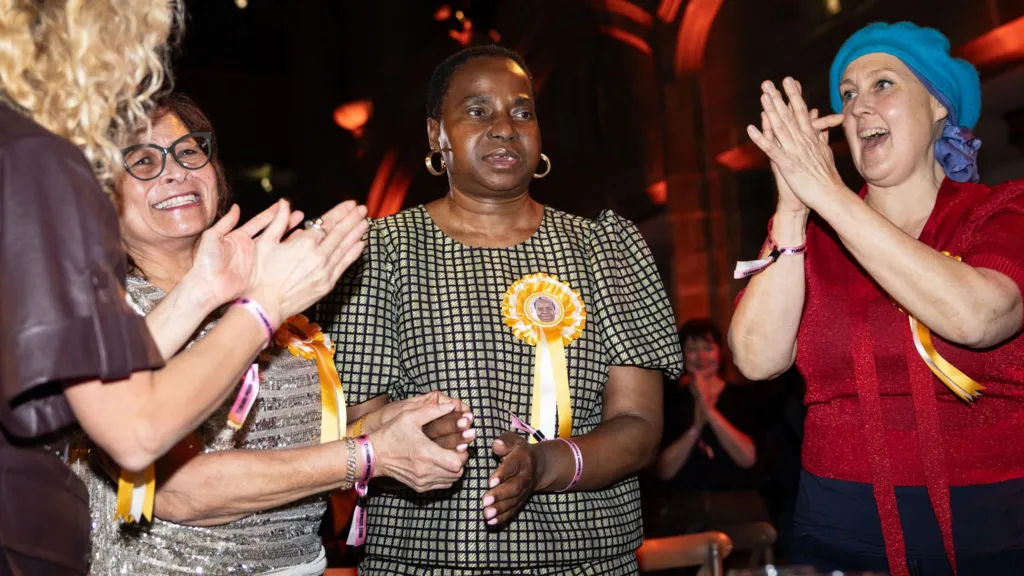
In Bradford, the atmosphere at the ceremony was described as electric. Attendees spoke of witnessing not only an award presentation but also a moment of profound cultural significance. The city, already in the national spotlight for its role as the UK City of Culture, became the setting for a symbolic shift that may shape future arts policy, curatorship, and education.
A Legacy Still in Motion
For Nnena Kalu, this milestone is expected to usher in new opportunities, museum acquisitions, international exhibitions, commissions, and collaborations. Yet those who follow her work closely note that her creative process is deeply rooted, steady, and consistent. The Turner Prize win will likely amplify her visibility, but it will not change the core of what she creates: works that emerge from movement, sensation, repetition, and an intuitive connection to materials.
Her legacy is already taking shape. She stands not only as a Turner Prize winner but also as a symbol of what becomes possible when institutions expand their perception of artistic value.
Nnena Kalu’s 2025 Turner Prize win is more than a career achievement, it is a cultural landmark. It redefines the boundaries of contemporary art, broadens the scope of who is acknowledged within prestigious institutions, and invites society to reconsider long-held assumptions about creativity, talent, and neurodiversity.
Her triumph sends a clear message: the art world is richest when it makes room for every kind of voice, every kind of mind, and every kind of story. And as this historic win ripples through the industry, it may well inspire a new era in which inclusivity is not an aspiration but a standard.
achievement;Don’t Miss