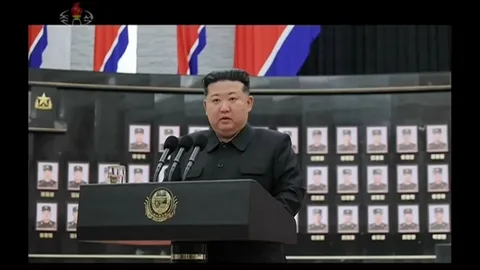
North Korean leader Kim Jong-un has confirmed that troops from the Korean People’s Army are engaged in landmine clearance operations in support of Russia, a development that has intensified international concern over Pyongyang’s expanding role in the ongoing war linked to Ukraine. The acknowledgement, delivered through official North Korean state communication, represents one of the most explicit statements yet tying North Korean military personnel to Russia’s war-related activities.
The admission marks a shift from previous ambiguity surrounding the nature of cooperation between Pyongyang and Moscow. Until now, North Korea’s involvement had largely been framed through political support and alleged weapons assistance. By openly confirming the presence of North Korean troops performing operational tasks, the statement elevates concerns that the partnership has moved from indirect backing to tangible military participation.
According to the official account, Kim Jong-un described the deployment as a technical mission focused on landmine removal, presenting it as a non-combat activity intended to enhance safety and stability in affected areas. The North Korean leadership emphasised that the operation was conducted at Russia’s request and framed it as cooperation between allied states facing shared security challenges. No specific locations or troop numbers were disclosed.
Despite efforts by Pyongyang to portray the activity as humanitarian or defensive in nature, military analysts note that landmine clearance plays a critical role in modern warfare. Removing mines enables safer troop movement, secures transport corridors, and allows for the consolidation of controlled territory. As a result, such operations are widely viewed as providing direct military benefit, even if they do not involve frontline combat.
The confirmation comes amid increasingly close ties between North Korea and Russia. Over the past year, both countries have expanded diplomatic engagement and openly criticised Western sanctions and security policies. Russia, under sustained military pressure and facing resource constraints, has sought support from non-Western partners. North Korea, heavily sanctioned and diplomatically isolated, appears to view cooperation with Moscow as a strategic opportunity to strengthen its international standing and secure future economic or military benefits.
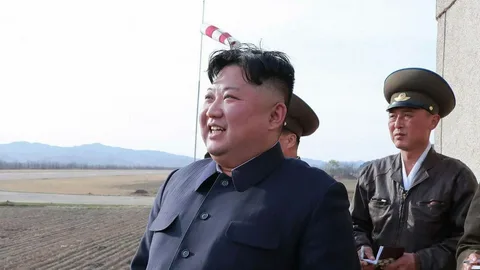
North Korea’s military is considered highly experienced in mine warfare, largely due to decades of fortification along the Korean Peninsula. Experts say this expertise makes North Korean engineering units particularly effective in mine clearance operations, giving Russia access to specialised manpower at a time when its own forces are stretched.
The admission has prompted renewed scrutiny from the United States, European governments, and regional actors in Asia. Officials have warned that any form of military assistance to Russia could violate United Nations Security Council resolutions that restrict North Korea’s overseas military activities. While Pyongyang argues that landmine clearance does not constitute offensive action, international legal experts note that assistance which directly supports a belligerent state may still fall under prohibited conduct.
Russia has not directly addressed Kim Jong-un’s statement. Russian officials have instead spoken broadly about cooperation with friendly nations, avoiding specific references to North Korean troop involvement. Analysts interpret this cautious response as an attempt to minimise diplomatic fallout while still benefiting from external assistance.
The development has also raised alarm in South Korea, where officials have expressed concern that North Korean troops could gain valuable operational experience in an active conflict environment. Even limited exposure to modern warfare conditions is seen as potentially enhancing North Korea’s military capabilities, with long-term implications for security on the Korean Peninsula.
Within North Korea, state media has portrayed the mission as a sign of national strength and international relevance. Coverage has emphasised solidarity with Russia and presented the deployment as evidence of Kim Jong-un’s leadership on the global stage. The messaging reinforces domestic narratives that North Korea is not isolated but actively shaping international affairs alongside powerful allies.
Security analysts say the acknowledgement reflects a broader trend of the conflict drawing in additional state actors, not just through weapons supplies or financial support but through personnel involvement. While the scale of North Korea’s contribution remains unclear, the symbolic impact of confirmed troop deployment is significant and may encourage further international responses.
As questions persist over the extent and duration of the landmine clearance mission, attention is likely to focus on whether North Korea’s role expands beyond its current scope. Kim Jong-un’s confirmation has moved the issue from speculation to record, forcing the international community to reassess the depth of cooperation between Pyongyang and Moscow and the effectiveness of existing diplomatic and sanctions frameworks.
For now, the development underscores how the conflict continues to reshape alliances and challenge established boundaries of international military involvement, with consequences that extend far beyond the immediate battlefield.