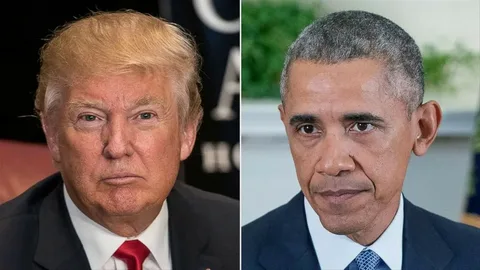
Former US President Barack Obama has addressed the backlash following the circulation of a racially offensive video reshared by former President Donald Trump, which portrayed Obama and former First Lady Michelle Obama using imagery widely condemned as racist.
The video, which spread across social media platforms after Trump reposted it, depicted the Obamas as apes, a comparison historically linked to racist caricatures of Black people. The post quickly triggered condemnation from civil rights organisations, Democratic politicians, and commentators, many of whom described it as dehumanising and dangerous.
Although Trump was not the creator of the video, critics focused on his decision to amplify it without condemnation or clarification. The repost drew particular scrutiny because of Trump’s political influence and history of racially charged controversies.
Content Of The Video
The video relied on digitally altered visuals rather than political commentary or policy critique. Its central focus was mockery through racial imagery, rather than satire or argument. Analysts noted that the absence of substantive political content made the racial framing more explicit.
The repost appeared during a period of heightened political tension in the United States, as Trump remains active on social media and continues to campaign following his reinstatement on major platforms.
Although the video was later removed, copies and screenshots continued to circulate, prolonging public reaction and calls for accountability.
Obama’s Reaction
Barack Obama responded by criticising the imagery and placing the incident within a wider discussion about the deterioration of political discourse. People familiar with his response said Obama viewed the video as an example of how racial hostility continues to surface in modern political communication.
Rather than responding with personal attacks, Obama focused on the broader implications of normalising racial caricature. He stressed that political disagreement should not involve language or imagery that strips individuals or groups of dignity.
According to those close to him, Obama was less concerned with personal offence and more with the social impact of such content, particularly on younger audiences and communities that have historically been targeted by similar stereotypes.
Michelle Obama’s Position
Michelle Obama did not issue a direct public statement in response to the video. However, the incident has been widely linked to her past remarks about racism and the personal toll of public hostility.
During and after Barack Obama’s presidency, Michelle Obama spoke openly about racist portrayals, conspiracy theories, and personal attacks directed at her family. Observers noted that the resurfacing of animalistic imagery fits a long-established pattern rather than representing an isolated episode.
Political Reaction
Democratic lawmakers were quick to condemn the repost, describing it as racist and unacceptable. Several argued that resharing such content crossed a clear line, even within the context of partisan conflict.
Republican responses were mixed. Some figures distanced themselves from the imagery without directly criticising Trump, while others declined to comment. Political analysts said the lack of consistent condemnation reflected broader divisions over standards of political behaviour in the digital era.
Civil Rights And Public Response
Civil rights organisations described the video as part of a historical pattern of racial dehumanisation in the United States. They highlighted that portraying Black people as animals has long been used to justify discrimination, segregation, and violence.
Public reaction online was swift and polarised. Many users expressed outrage and called for consequences, while Trump supporters argued that he merely reshared content created by others. Critics countered that amplification by a high-profile political figure carries responsibility, regardless of authorship.
Advocacy groups also renewed calls for social media platforms to apply moderation rules consistently, particularly where content relies on racial stereotypes.
Trump’s History Of Racial Controversies
The incident has been viewed within the broader context of Trump’s past controversies involving race. Throughout his political career, Trump has faced repeated criticism over statements about immigrants, minorities, and political opponents, as well as for promoting conspiracy theories involving Barack Obama.
Trump has consistently denied accusations of racism, often framing criticism as politically motivated. In this case, he did not issue an apology or directly address the racial nature of the imagery.
Supporters have argued that such controversies are exaggerated, while critics see them as part of a deliberate pattern of provocation.
The Wider Political Environment
The episode has underscored how political messaging in the United States has become increasingly visual and confrontational. Short videos, memes, and edited clips now play a central role in shaping political narratives.
Experts warn that this environment rewards provocation and outrage, encouraging increasingly extreme content. They argue that the use of racist imagery marks a troubling escalation that shifts debate away from policy and toward personal and identity-based attacks.
Obama’s measured response was interpreted by some analysts as an attempt to highlight the issue without inflaming tensions further.
Accountability On Social Media
The controversy has revived debate over the responsibility of public figures on social platforms. While reposting is a common feature, critics argue that influential users must consider the impact of amplifying offensive material.
Calls have been made for clearer enforcement standards around content involving racial caricatures, regardless of whether it is presented as humour, satire, or political messaging.
Social media companies have not publicly detailed their enforcement decisions, but the removal of the video suggests it violated platform rules.
Impact On Public Discourse
The incident has renewed attention on the role of race in American political conflict. Commentators argue that the use of dehumanising imagery undermines democratic debate and normalises hostility.
For Barack Obama, the episode has been seen as another reflection of the racial dynamics that shaped reactions to his presidency and continue to influence his public life.
For Donald Trump, it has reinforced perceptions among critics that controversy and provocation remain central to his political strategy.
What Comes Next
There is no indication that the incident will lead to legal action. However, it is likely to remain part of ongoing discussions about political conduct, racism, and online accountability as future elections approach.
Obama continues to engage publicly on issues related to democracy and civic responsibility. Trump remains highly active online and shows little sign of altering his confrontational approach.
The episode illustrates a continuing challenge in modern politics, balancing free expression with the need to reject content that dehumanises and harms. As debate continues, the incident stands as a reminder of how political messaging, race, and digital platforms intersect, with consequences that extend beyond individual figures.