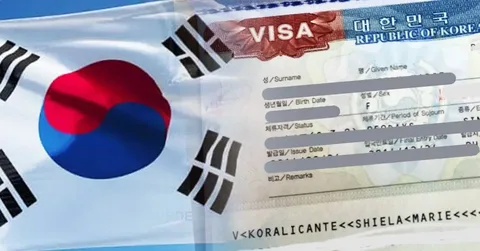
South Korea’s decision to extend its visa fee waiver for six countries until June 2026 has not dominated global headlines, yet it is one of the most consequential travel policy signals the country has made in recent years. While most coverage has focused on the announcement itself, few reports have explored the deeper implications of this move, why it matters beyond tourism, and what it reveals about South Korea’s broader economic and diplomatic priorities.
At first glance, the extension appears straightforward. Eligible travellers from six designated countries will continue to apply for short-term visas without paying the standard application fee until June 2026. However, beneath that simplicity lies a carefully calculated policy choice, one that intersects tourism recovery, international competitiveness, labour mobility, and soft power projection.
This article goes beyond the announcement to explain what is really going on, who stands to gain, and why this extension should be understood as part of a longer-term strategy rather than a temporary concession.
Understanding the Visa Fee Waiver
A visa fee waiver removes the cost associated with submitting a visa application, not the visa process itself. Applicants must still meet eligibility requirements, submit documentation, and undergo screening by South Korean immigration authorities. What changes is the financial barrier, which for many travellers can be a deterrent, particularly for short stays.
By extending the waiver until June 2026, South Korea is signalling that it views reduced entry costs as a tool for sustained engagement rather than a short-term incentive. This distinction is important. Temporary waivers often aim to stimulate immediate travel demand, whereas multi-year extensions suggest confidence that the benefits outweigh the revenue lost from visa fees.
For the six eligible countries, the extension offers predictability. Travellers, tour operators, education consultants, and business planners can now factor this policy into medium-term plans without the uncertainty of a sudden reversal.
Why South Korea Is Taking This Approach
South Korea’s travel and immigration policies do not exist in isolation. They are shaped by regional competition, demographic realities, and global economic pressures.
First, South Korea is competing aggressively for international visitors and talent. Neighbouring destinations in East and Southeast Asia have rolled out visa relaxations, digital nomad visas, and entry incentives in recent years. In this context, maintaining visa fees could quietly push travellers towards alternative destinations offering fewer entry costs.
Second, South Korea’s economy relies heavily on international engagement. Tourism contributes significantly to service-sector employment, while international students and short-term business visitors support universities, research institutions, and technology firms. Reducing entry friction aligns with the country’s need to remain globally connected.
Third, there is a demographic angle. South Korea faces long-term population challenges, including a declining birth rate and an ageing workforce. While a visa fee waiver does not directly address immigration gaps, it plays a role in making the country more accessible and attractive, especially to younger travellers, students, and early-career professionals who may later pursue longer-term opportunities.
Why Only Six Countries
One of the most common questions surrounding this policy is why it applies to only six countries. The answer lies in reciprocity, risk assessment, and diplomatic alignment.
Visa policies are often shaped by bilateral agreements and historical travel patterns. Countries with lower overstay rates, established diplomatic relations, and strong travel compliance records are more likely to benefit from relaxed measures. By limiting the waiver to a specific group, South Korea balances openness with control.
This selective approach allows authorities to monitor outcomes closely. If the extension leads to increased travel without negative immigration consequences, it strengthens the case for future expansions or similar incentives for additional countries.
Economic Impact Beyond Tourism
While tourism is the most visible beneficiary of the South Korea visa fee waiver, the economic effects extend further.
Business travel is one area often overlooked in public discussions. Short-term business visas facilitate meetings, trade negotiations, conferences, and market entry assessments. Removing the application fee reduces friction for companies exploring partnerships or investments in South Korea.
Education is another key sector. Prospective students frequently begin their engagement with short-term visits, academic programmes, or exchange opportunities. Lower entry costs can influence destination choice, particularly in a competitive global education market.
Even cultural industries benefit indirectly. South Korea’s global cultural influence, from entertainment to fashion and cuisine, thrives on international exposure. Easier access supports festivals, exhibitions, and collaborative projects that reinforce the country’s soft power.
What This Means for Travellers
For eligible travellers, the extension offers both financial and psychological benefits.
Financially, the savings may appear modest on an individual level, but for families, groups, or frequent travellers, the cumulative impact is meaningful. More importantly, the removal of the fee lowers the perceived cost of entry, which can influence decision-making even when the actual amount is relatively small.
Psychologically, visa fees often act as a symbolic barrier. Their removal sends a message of welcome and openness. In an era where travellers are increasingly sensitive to administrative hurdles, this message matters.
However, it is essential to emphasise that the waiver does not guarantee visa approval. Applicants must still meet all requirements, and immigration authorities retain full discretion. The policy simplifies access, but it does not replace due process.
The choice of June 2026 as the end date is not arbitrary. It provides a two-year-plus window that aligns with medium-term planning cycles for governments and industries alike.
For South Korea, this period allows sufficient time to evaluate data, including arrival numbers, compliance rates, and economic impact. It also avoids the instability associated with short extensions that require frequent policy renewals.
For travellers and businesses, the timeline offers certainty. It enables long-term scheduling of events, academic programmes, and travel initiatives without the risk of sudden cost increases.
Importantly, the extension’s duration reinforces its evergreen relevance. Even as global travel conditions change, this policy remains applicable, making it a consistent reference point rather than a fleeting headline.
How This Decision Fits Into Global Travel Trends
Globally, visa policies are becoming a strategic lever rather than a mere administrative process. Countries are increasingly using entry conditions to attract specific types of visitors while managing security and migration risks.
South Korea’s approach reflects this shift. Instead of blanket liberalisation, it is opting for targeted incentives with measurable outcomes. This allows flexibility and control while still sending a competitive signal to the global travel market.
The extension also underscores a broader trend towards reducing non-essential travel costs. As travellers face rising expenses in accommodation, transport, and insurance, even small policy changes can influence destination choices.
Although the extension runs until June 2026, it should not be viewed as static. Policy adjustments, expansions, or refinements remain possible, particularly if outcomes exceed expectations.
Observers should watch for data-driven indicators, such as increased visitor numbers from eligible countries, improved compliance rates, and positive feedback from industry stakeholders. These factors will likely shape South Korea’s future visa strategies.
Equally, global events, economic shifts, and regional travel dynamics could influence whether similar waivers are introduced elsewhere or extended further.
South Korea’s extension of its visa fee waiver for six countries until June 2026 is not just a travel headline. It is a calculated policy move that reflects economic priorities, diplomatic considerations, and a nuanced understanding of global mobility.
By lowering entry costs while maintaining regulatory oversight, South Korea positions itself as accessible yet selective, open yet strategic. For travellers, businesses, and institutions, the decision offers clarity and opportunity. For policymakers, it provides a framework for evaluating how targeted incentives can support national goals.
In a world where travel policies often shift unpredictably, this extension stands out for its foresight and stability. It may not dominate breaking news cycles, but its impact will be felt long after the headlines fade.