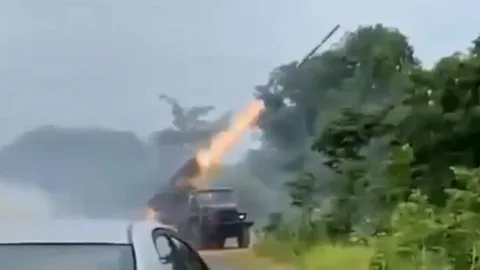
Thailand has launched a series of airstrikes along a disputed stretch of its border with Cambodia, marking one of the most serious escalations between both countries in recent years. The strikes, which began early Monday, follow days of rising tensions, cross-border artillery exchanges, and the breakdown of a fragile ceasefire agreement that had previously eased hostilities in the region.
Thai military officials confirmed that fighter aircraft were deployed to “neutralise hostile positions” allegedly occupied by Cambodian troops along several flashpoints in Thailand’s Ubon Ratchathani province and the corresponding borderlands within Cambodia. According to Thailand, the strikes were a direct response to what it described as “persistent Cambodian aggression” and the killing of a Thai soldier in a clash last week.
Cambodia, however, swiftly rejected these claims, accusing Thailand of initiating unprovoked attacks and violating Cambodian sovereignty. In a televised statement, Cambodian defence officials condemned the action as “a reckless act of war” and urged the international community and regional leaders to intervene before the situation spirals beyond control.
This latest outbreak of violence threatens to undo months of diplomatic efforts. A ceasefire agreement, brokered earlier in the year after a deadly confrontation in July, has been increasingly strained by repeated accusations from both sides. Thailand asserts that Cambodia has continually violated the truce by placing landmines, deploying troops in restricted zones, and firing across border posts. Cambodia insists these claims are fabricated and maintains that Thailand has long sought to expand its military presence along the contested frontier.
Talks between the two governments had stalled in recent weeks, and both sides openly acknowledged that the truce was weakening. Reports from local authorities in border provinces indicated that small-scale skirmishes and exchanges of gunfire had become more frequent, with communities increasingly anxious about the possibility of a full resumption of hostilities.
Monday’s airstrikes, therefore, represent not only an escalation but also a clear indication that the ceasefire has effectively collapsed.
Humanitarian Consequences Mount
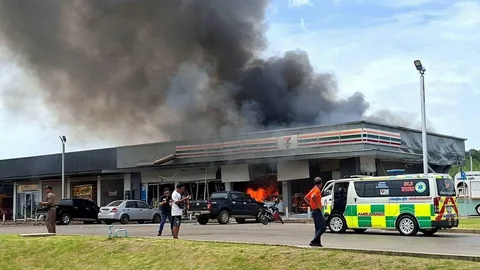
The renewed conflict has triggered large-scale displacement on both sides of the border. Thai authorities estimate that several hundred thousand civilians have moved inland from frontline provinces, including Ubon Ratchathani, Sisaket, and Surin. Temporary shelters have been set up in schools, sports centres, and other public buildings. Many families have left behind farmland, livestock, and property, unsure of when or if they will return.
Cambodia has reported similarly high numbers of displaced residents in areas near the Preah Vihear, Oddar Meanchey, and Banteay Meanchey provinces. Aid groups working in the region warn that the humanitarian situation could worsen rapidly if the conflict continues, particularly as many fleeing families lack access to food, clean water, and medical assistance.
In addition to the immediate displacement, the conflict has forced the closure of dozens of schools, border trade facilities, and transport routes. Local economies, already weakened by earlier clashes this year, face renewed disruption as freight deliveries, produce markets, and cross-border business operations cease entirely.
Decades-Long Dispute at the Center
The border tension between Thailand and Cambodia is rooted in a dispute that stretches more than a century. Much of the conflict centres on contested areas whose demarcation dates back to colonial-era treaties established when Cambodia was under French rule. Portions of the 817-kilometre border were never clearly marked, resulting in overlapping territorial claims that have been a source of repeated friction.
One of the most contentious areas surrounds the ancient Preah Vihear Temple, a UNESCO-listed site that has symbolic and strategic significance. Though an international court ruling in the 20th century awarded the temple to Cambodia, surrounding land remains disputed, fuelling nationalist sentiment in both countries and making diplomatic compromise politically sensitive.
Over the years, numerous clashes have erupted along this border—some lasting days, others stretching into weeks. Despite repeated negotiations and attempts by various governments and regional bodies to mediate, disagreements persist, often reigniting after periods of relative calm.
Political Implications in Both Capitals
The latest escalation comes at a time when both countries face internal political pressures. In Thailand, the government has insisted that it must defend national sovereignty and respond decisively to any perceived provocation. Officials have denied claims that their actions were excessive and emphasised that the airstrikes were necessary to protect Thai troops stationed along the border.
In Cambodia, government leaders have taken a firm stance, condemning Thailand’s actions while assuring citizens that Cambodian forces will “defend every inch of Cambodian territory.” The rhetoric from Phnom Penh has been strikingly strong, reflecting both political pressure and public outrage over the strikes.
Diplomats from neighbouring Southeast Asian countries have expressed concern that nationalist rhetoric from both sides could inflame the situation further, making de-escalation more difficult.
Regional and International Response
The conflict’s escalation has drawn attention across Southeast Asia, particularly among ASEAN member states who fear that prolonged clashes could destabilise the region. Calls for restraint and renewed dialogue have emerged from several governments, emphasising the importance of preserving regional peace and avoiding actions that could lead to a broader conflict.
International observers note that both Thailand and Cambodia have historically been reluctant to involve external powers directly in their territorial disputes, often preferring bilateral talks. However, with tensions now at their highest point in years, some analysts believe a neutral third-party mediator may be necessary to bring both sides back to the negotiating table.
Uncertain Path Ahead
As of Tuesday morning, sporadic gunfire and artillery exchanges were still being reported along certain border points. Neither side has indicated a willingness to stand down or initiate urgent dialogue. The next few days will likely determine whether the conflict intensifies into a prolonged confrontation or whether diplomatic intervention can halt further escalation.
For the hundreds of thousands of civilians now displaced or living in fear, the hope is simply for calm to return. But with both armies on high alert and political rhetoric hardening, uncertainty looms large over the border region.
If de-escalation efforts fail, the cost may extend far beyond damaged buildings and disrupted lives, it could reshape regional security dynamics and leave deep scars in a relationship already burdened by decades of mistrust.