
The Central Bank of Nigeria (CBN)’s decision to revise its cash-withdrawal policy effective January 2026, marks one of the most significant shifts in Nigeria’s financial regulatory landscape in recent years. The announcement, which brings an end to the long-standing special authorisation system for large cash withdrawals, signals a decisive push toward a more disciplined, cash-lite financial environment.
The new rules are shaping conversations across banking halls, market centres, corporate offices, and even rural communities, as Nigerians brace for what these changes will mean for daily transactions, business operations, and financial planning.
Under the new policy, individuals will be limited to total weekly cash withdrawals of ₦500,000 across all platforms: over-the-counter, ATM, or POS. Corporate entities will have a higher limit of ₦5 million weekly. Withdrawals above these thresholds will attract excess charges: 3% for individuals and 5% for companies.
The previous special authorisation, where individuals could collect up to ₦5 million and corporates up to ₦10 million once a month after proper justification, has now been scrapped entirely. The CBN stated that the special authorisation window had become a loophole that threatened the effectiveness of its cash-management policies and exposed the financial system to risks such as money laundering, hoarding, and poor currency circulation.
By standardising the rules and removing exceptions, the apex bank is attempting to create a predictable environment where the use of physical cash is limited, monitored, and tightly regulated. This shift is not happening in isolation; it builds on earlier efforts to promote digital payments and reduce Nigeria’s overwhelming reliance on cash. While the cashless policy introduced in 2012 made significant progress, Nigeria remains a highly cash-centric economy, especially in informal sectors and rural communities. The new 2026 rules reinforce the CBN’s message that the nation must fully embrace electronic channels, not just as an option but as a necessity for modern financial operations.
The end of the special authorisation represents more than just a technical tweak to the rules; it represents a philosophical shift in how the CBN expects Nigerians to interface with money. For years, the special authorisation served as a safety valve for businesses and individuals who occasionally needed to access large cash sums. Farmers making bulk purchases, transport businesses paying settlements, retailers restocking goods, and event organisers handling cash-heavy transactions all depended on this provision. By eliminating it, the CBN is signalling that the era of “exception-based cash access” is over. Now, if anyone exceeds their weekly limit, they will simply pay for it.
The structure of the excess withdrawal fees (3% and 5%) is designed to discourage routine large cash withdrawals but not to completely ban them. In practice, it creates a hybrid environment: cash remains available, but it now carries an economic cost when used beyond normal limits. For the CBN, this is a strategic balance between access and control. Instead of outright bans, the bank is relying on pricing to nudge Nigerians toward digital alternatives.
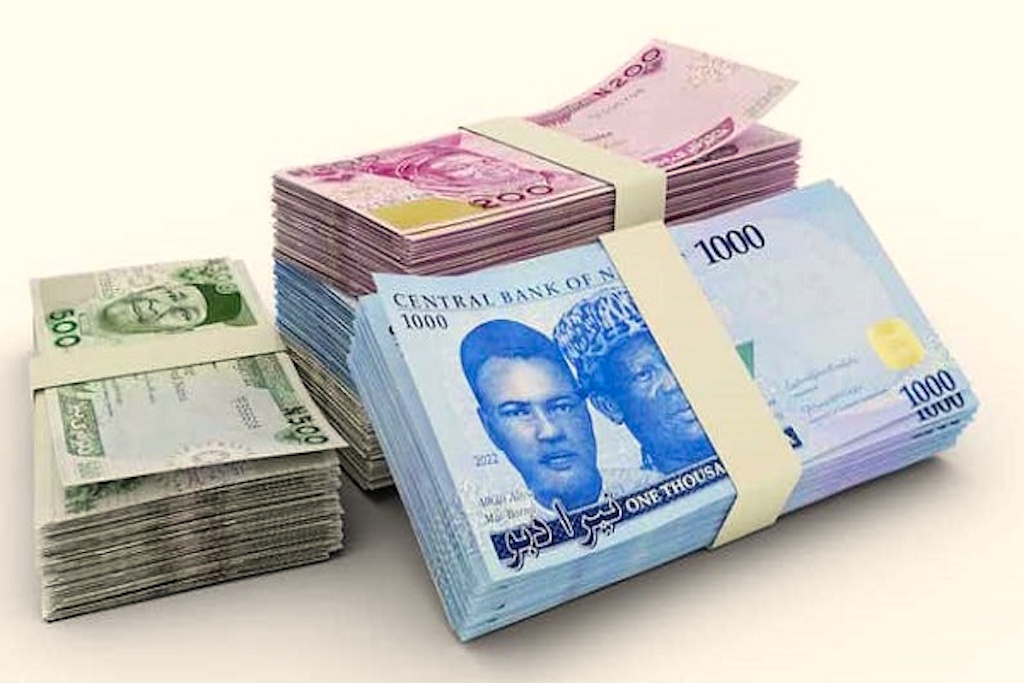
Another notable component of the revised policy is the reinforcement of ATM and OTC guidelines. While daily ATM limits remain unchanged at around ₦100,000 per day, the only withdrawals that count are those that stay within the overall weekly caps. For example, even if someone withdraws ₦100,000 daily from an ATM, they cannot exceed ₦500,000 in total for the week. The CBN has also maintained that all denominations can be loaded into ATMs, a reminder to banks to support smooth withdrawal operations and reduce pressure on banking halls.
These rules reflect the CBN’s understanding that cash shortages, hoarding, and circulation problems often stem from behavioural patterns rather than scarcity alone. By placing firm weekly limits and removing exemptions, the bank is attempting to ensure that cash remains in structured circulation rather than moving into untraceable informal channels.
Some exemptions remain, but they are now narrow and clearly defined. Government revenue accounts: federal, state, and local, are not subject to these limits, as they handle public funds that require constant movement. Similarly, microfinance banks and mortgage banks domiciled under commercial banks have exemptions due to the nature of their operations. Beyond these categories, however, all accounts, namely, individual and corporate, are covered by the new rules without exception.
The reactions to the policy have been mixed. Supporters see the end of the special authorisation as long overdue. They argue that the old system created too much room for manipulation and that large cash withdrawals, regardless of justification, can easily fuel illicit activities. For these supporters, the new rules will strengthen the financial ecosystem by increasing transparency, reducing the amount of cash circulating outside formal channels, and encouraging more Nigerians to adopt digital payment structures that are efficient, traceable, and safer.
But critics of the policy argue that the reality on the ground is more complicated. They point out that Nigeria’s digital infrastructure is still uneven, especially in rural and semi-urban areas where network downtime, POS failures, and unstable banking platforms make digital payments unreliable. For them, forcing millions of cash-dependent Nigerians to adopt a cash-lite lifestyle without solving these infrastructural gaps may create unnecessary disruption.
Businesses that rely heavily on cash transactions, such as local traders, transport operators, small manufacturers, market aggregators, and agricultural supply chains, may find the new limits restrictive. Although they can exceed the limits by paying the excess charges, critics worry that these charges will ultimately increase the cost of operations and inflate the prices of goods and services.
Another concern is with liquidity in the informal sector, which accounts for a significant portion of Nigeria’s economy. Many informal businesses operate on thin margins and rely on daily or weekly cash turnover. The withdrawal caps could affect their ability to scale, settle suppliers, or respond quickly to sudden market opportunities. While digital payments have grown significantly in Nigeria, especially with mobile banking and agency banking, the informal sector still prefers cash for speed, simplicity, and trust.
Still, the CBN’s position suggests that it views these disruptions as short-term adjustments necessary for long-term stability. The bank believes that reducing cash dependency will help tackle corruption, improve security by reducing robbery risks, simplify monetary policy management, and bring more transactions into the formal economy where they can be monitored and taxed appropriately. Over time, the apex bank expects that digital payments will become more widespread, more reliable, and more secure, creating an environment where large cash withdrawals are simply unnecessary.
For Nigerians, the new rules mean the need to rethink how they interact with money. Individuals will have to plan their weekly withdrawals more strategically, ensuring that essential expenses fall within the legal limits to avoid charges. Businesses must begin to expand their acceptance of digital payment channels, whether through POS, bank transfers, digital wallets, or corporate online banking platforms. Many will need to restructure how they handle payroll, supplier payments, and operational expenses.
In the coming months leading up to the implementation date, financial institutions are expected to intensify customer sensitisation. Banks will need to ensure their digital channels can handle increased volume while minimising downtime and transaction failures. Nigerians, on the other hand, will have to adapt to a financial environment where the free flow of cash is no longer taken for granted.
The CBN’s revised withdrawal rules represent a bold attempt to propel Nigeria further into a digital economy. Whether the transition will be smooth or bumpy depends largely on how quickly both the public and private sectors can adapt. While challenges remain, the long-term vision is clear: a more transparent, efficient, and modern financial system where physical cash is no longer the centre of gravity.