
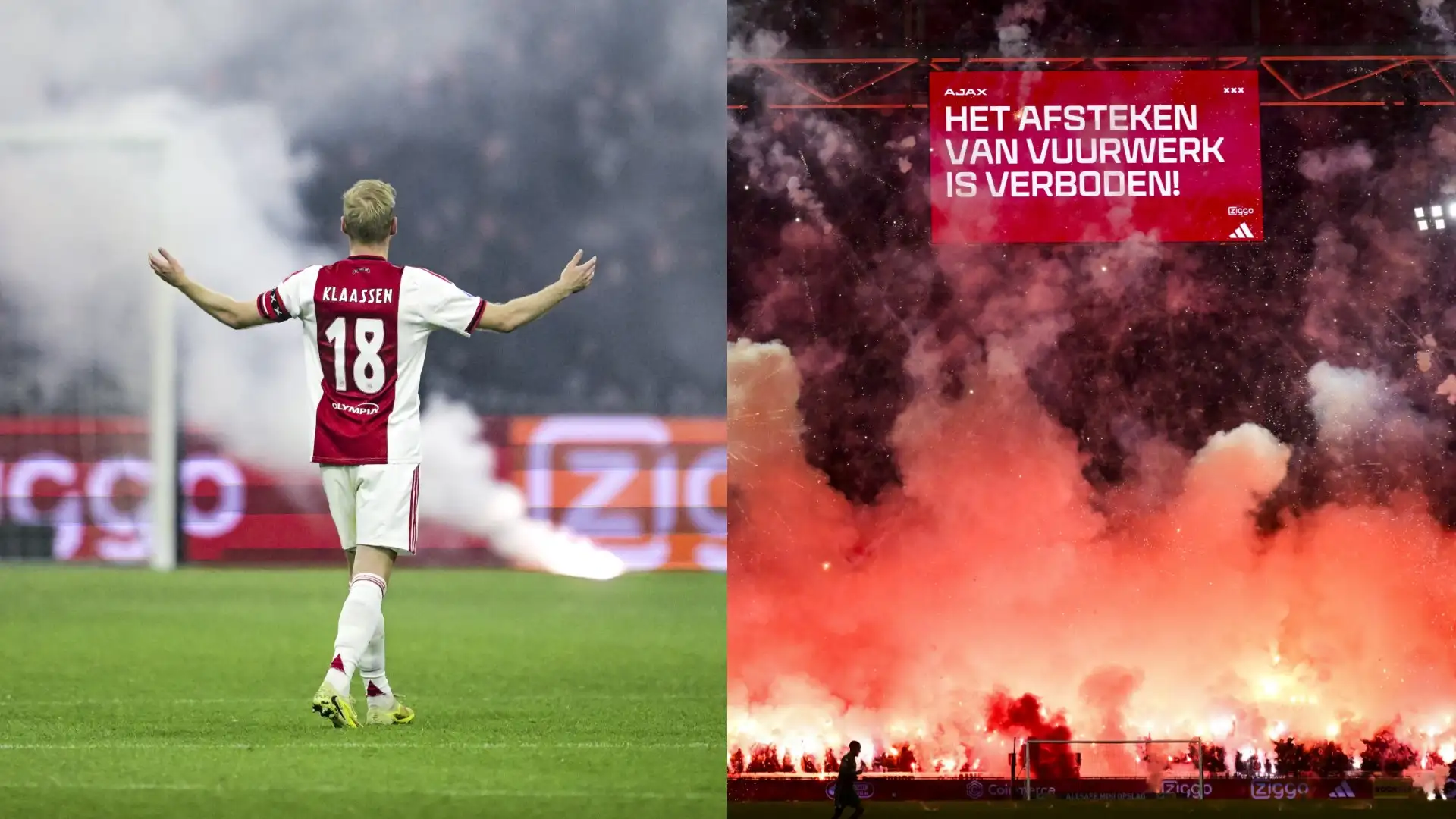
A highly anticipated Eredivisie clash between AFC Ajax and FC Groningen was abruptly abandoned on Sunday at the Johan Cruyff Arena after fans ignited a series of fireworks and flares, creating dangerous conditions on the pitch. The unprecedented disruption occurred just minutes after the game began, leaving players, officials, and spectators stunned as the match descended into chaos.
The trouble began barely five minutes into the fixture, when a group of Ajax supporters, reportedly part of the club’s ultras, set off fireworks behind one of the goals. The pyrotechnics created thick smoke that quickly enveloped the stadium, forcing the referee to halt play. Players were immediately escorted off the pitch, while stadium staff and security personnel attempted to contain the situation. Despite prior security measures, including bag checks and the deployment of detection dogs, the fans managed to smuggle fireworks into the arena, highlighting a glaring security lapse.
Efforts to resume the match after an initial pause were thwarted almost immediately. As the smoke began to clear, additional fireworks were ignited by the same group of supporters, prompting the referee to abandon the match entirely. At the time of abandonment, the game was still scoreless, leaving both teams frustrated and spectators dismayed. The referee, visibly exasperated, emphasised that the decision was necessary to guarantee the safety of players and officials, who were exposed to the dangerous projectiles.
Ajax swiftly released a statement condemning the actions of the fans involved, describing their behaviour as “utterly scandalous” and apologising to those who had attended the match in good faith. The club expressed regret over the incident and assured that it would work closely with authorities to identify and sanction the individuals responsible. The management emphasised that such actions not only endanger lives but also tarnish the club’s reputation, undermining years of effort to promote safety and sportsmanship in football.
The Dutch football authorities have since launched a formal review of the incident, and discussions are ongoing regarding potential disciplinary measures. These could include heavy fines, stadium bans, or other sanctions aimed at deterring similar behaviour in the future. Meanwhile, the match is scheduled to resume behind closed doors, without the presence of spectators, in order to complete the fixture safely.
This incident has reignited concerns about fan conduct in Dutch football. While fireworks and flares have long been used by ultras as part of stadium displays or commemorations, their uncontrolled use presents significant risks. Previous encounters at the Johan Cruyff Arena have seen clashes with rival supporters and minor disruptions caused by flares, but the events of Sunday represent one of the most serious breaches of stadium safety in recent years. The recurrence of such incidents underscores the difficulty authorities face in balancing fan engagement with safety protocols.
The repercussions of the abandonment are likely to extend beyond the immediate fixture. Ajax, already navigating a turbulent season, now faces potential league sanctions and must contend with the administrative and logistical challenges of completing the rescheduled match. Players, too, are affected, as the disruption interrupts their rhythm and preparation and may have psychological effects on both squads in upcoming fixtures. The governing body’s investigation will also examine the broader implications for stadium management, security practices, and fan accountability, with the goal of preventing future occurrences.
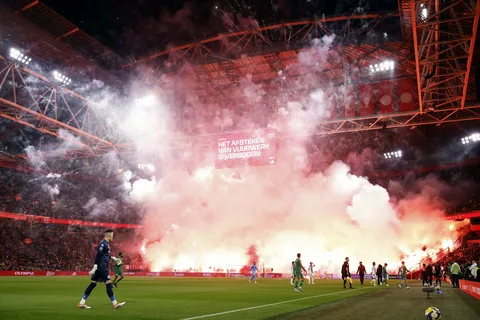
Eyewitness accounts from spectators highlight the fear and confusion caused by the incident. Fans seated near the ignition points reported being hit by sparks and experiencing breathing difficulties from the smoke, while others expressed frustration at the lack of immediate action by stadium staff. Social media quickly filled with videos showing the intensity of the fireworks, the ensuing chaos, and players retreating to the locker rooms. The scenes sparked widespread criticism and reignited debates on whether current security measures are adequate for high-profile matches.
For Ajax, the situation represents both a public relations and operational challenge. The club’s management has emphasised its commitment to investigating the breach thoroughly and implementing additional safety measures for future games. Discussions include stricter entry controls, increased surveillance within the stadium, and potential collaboration with law enforcement to prevent banned individuals from gaining access. The focus remains not only on punishment but also on ensuring that fans can enjoy matches in a secure environment without endangering themselves or others.
The incident also raises questions about the responsibilities of fan groups. While ultras are often celebrated for their passionate support, their willingness to disregard safety regulations can have far-reaching consequences. The repeated use of pyrotechnics in stadiums is increasingly viewed as a serious threat, with potential legal repercussions for those involved. Authorities are likely to pursue prosecutions against identified perpetrators, sending a clear message that such behaviour will not be tolerated.
As preparations are made for the rescheduled match behind closed doors, attention turns to the wider implications for Dutch football. The Eredivisie has prided itself on vibrant fan culture, but the balance between enthusiasm and safety has become increasingly delicate. Clubs, fans, and authorities are being forced to confront the reality that passion without discipline can have dangerous consequences. For Ajax and FC Groningen, the events of Sunday will be remembered not for the action on the pitch, but for the extraordinary chaos that interrupted a professional fixture, jeopardised lives, and sent shockwaves through the football community.
The resumption of the match without spectators is expected to be closely monitored, with stringent security measures in place to prevent any recurrence. The football community now waits to see how authorities handle the fallout, both in terms of disciplinary action and the implementation of stronger protocols for stadium safety. For fans, the incident serves as a stark reminder that the thrill of live football carries responsibilities and that the actions of a few can overshadow the enjoyment of thousands.
In summary, the abandonment of the Ajax vs Groningen match is a stark illustration of the hazards posed by uncontrolled fan behaviour. The episode underscores the importance of rigorous safety measures, accountability for perpetrators, and the ongoing challenge of maintaining order in environments charged with emotion and passion. As Dutch football authorities and clubs work to prevent similar incidents, the events at the Johan Cruyff Arena will remain a cautionary tale about the fine line between fan enthusiasm and endangerment.