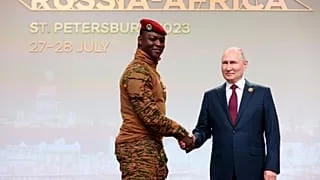
Burkina Faso has voted to accede to the Vienna Convention on Civil Liability for Nuclear Damage, a move taken under the leadership of transitional President Captain Ibrahim Traoré as the country continues to lay the legal and institutional groundwork for the possible development of nuclear power.
The decision was approved by Burkina Faso’s legislative authorities as part of a broader effort by the Traoré-led government to restructure the country’s energy policy and reduce long-term dependence on imported electricity and fossil fuels. While the move does not authorise the construction of a nuclear power plant, it places Burkina Faso within a recognised international framework governing liability and compensation for nuclear damage.
The vote represents one of the clearest legal signals to date that Burkina Faso’s current leadership is preparing the foundational conditions required for nuclear energy, a process that typically begins years before any physical infrastructure is built.
The Vienna Convention and Its Role
The Vienna Convention on Civil Liability for Nuclear Damage is an international treaty that establishes rules on who bears responsibility in the event of a nuclear accident and how victims are compensated. It channels liability exclusively to the operator of a nuclear installation and requires that operator to maintain financial security, such as insurance or state-backed guarantees.
For countries exploring nuclear energy, accession to the convention is considered a critical step. It reassures international partners, reactor suppliers, insurers, and financial institutions that a clear and predictable liability regime is in place before any nuclear activity begins.
By voting to join the convention, Burkina Faso commits to aligning its domestic laws with these principles, ensuring that responsibility for nuclear damage is clearly defined and legally enforceable.
Traoré’s Energy Strategy Context
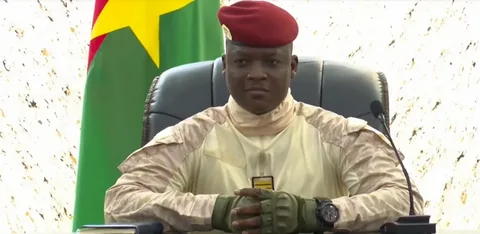
Captain Ibrahim Traoré, who came to power following a military takeover in 2022, has repeatedly emphasised economic sovereignty, strategic independence, and long-term infrastructure development as central pillars of his administration.
Energy security has featured prominently in this agenda. Burkina Faso remains heavily reliant on electricity imports from neighbouring countries and on thermal generation powered by imported fuel. This reliance exposes the country to price volatility, supply disruptions, and fiscal pressure.
Under Traoré’s leadership, the government has pursued a diversified energy strategy that includes expanding solar capacity, strengthening national power infrastructure, and exploring long-term options such as nuclear energy. The vote to join the Vienna Convention fits within this broader framework of preparation rather than immediate deployment.
Why Nuclear Power Is Being Considered
Nuclear power offers stable, large-scale electricity generation with low greenhouse gas emissions. For Burkina Faso, which faces rising electricity demand due to population growth and urbanisation, nuclear energy is being assessed as a potential long-term solution rather than a near-term fix.
Government officials have framed nuclear power as part of a future-oriented strategy to support industrialisation, mining activities, and national electrification. While renewable energy, particularly solar, remains central to current plans, nuclear power is viewed as complementary rather than competitive.
The Traoré administration has not announced a timeline for constructing a nuclear plant, nor has it identified specific sites or partners. Instead, it has focused on meeting international legal and regulatory prerequisites first.
Legal Implications of Accession
By joining the Vienna Convention, Burkina Faso accepts obligations that go beyond symbolic alignment. The country must establish a national nuclear liability regime consistent with the treaty’s provisions. This includes defining compensation mechanisms, liability limits, and enforcement procedures.
Such legal reforms are typically among the earliest steps taken by states preparing for nuclear energy, even when actual construction may be decades away. They also facilitate engagement with international nuclear institutions and technical assistance programmes.
For Traoré’s government, this move signals an intention to proceed methodically rather than hastily, particularly given the complexity and sensitivity of nuclear technology.
International and Regional Significance
Burkina Faso’s decision carries regional implications, as nuclear accidents can have cross-border consequences. Liability conventions are designed to ensure that neighbouring states and affected populations have access to compensation in the event of transboundary damage.
In Africa, nuclear power remains limited, with only a small number of operational reactors. However, interest in nuclear energy is growing across the continent as countries seek reliable, low-carbon power sources.
By acceding to the Vienna Convention, Burkina Faso joins a group of states that have committed to internationally recognised standards, potentially strengthening regional cooperation on nuclear safety and governance.
Economic and Investment Considerations
Nuclear projects require substantial long-term investment and international cooperation. Technology providers and financiers typically require robust legal frameworks before engaging with prospective nuclear states.
Accession to the Vienna Convention reduces legal uncertainty by clarifying liability arrangements. This is particularly important for a country like Burkina Faso, which would need external expertise, technology, and financing if it were to pursue nuclear power.
While no agreements have been announced, the legal groundwork enhances Burkina Faso’s credibility as a future participant in nuclear energy discussions.
Public Safety and Accountability
Nuclear energy raises public concerns related to safety, environmental protection, and radioactive waste management. International liability conventions address the aftermath of accidents rather than their prevention, but they reinforce the principle that nuclear operators must be accountable for harm.
Under Traoré’s leadership, the government has emphasised national control and responsibility in strategic sectors. Joining the Vienna Convention aligns with this narrative by placing legal responsibility clearly on operators rather than dispersing blame.
Public communication around nuclear issues remains limited, and any future steps toward implementation would likely require broader engagement and transparency.
What the Vote Does Not Represent
The decision to join the Vienna Convention does not mean that Burkina Faso has committed to building a nuclear reactor. There is no approved project, budget allocation, or construction timeline.
Nuclear power development typically spans many years and requires regulatory bodies, trained personnel, emergency preparedness systems, and waste management strategies. None of these elements have yet been publicly finalised.
The vote should therefore be understood as a preparatory and strategic move rather than an operational one.
Political Dimensions Under Traoré
The decision also reflects the Traoré administration’s broader effort to reposition Burkina Faso on the international stage. By engaging with global legal frameworks, the government signals a willingness to meet international standards while pursuing national development goals.
This approach balances assertions of sovereignty with participation in multilateral systems, particularly in technical areas such as energy and safety.
What Comes Next
Following the vote, Burkina Faso must formally deposit its instrument of accession and begin the process of harmonising national legislation with the Vienna Convention. This may involve drafting new laws, establishing regulatory structures, and seeking international expertise.
Any further movement toward nuclear power would require additional treaties, feasibility studies, and institutional development. These steps would be subject to both domestic approval and international oversight.
Under the leadership of Captain Ibrahim Traoré, Burkina Faso’s decision to join the Vienna Convention represents a deliberate and strategic step in preparing for possible nuclear power development. The move strengthens the country’s legal framework, aligns it with international norms, and signals long-term intent rather than immediate action.
While nuclear power remains a distant prospect, the vote reflects a structured approach to energy planning that prioritises legal readiness and international credibility. Whether this groundwork eventually leads to a nuclear project will depend on political stability, economic capacity, and sustained institutional development in the years ahead.