
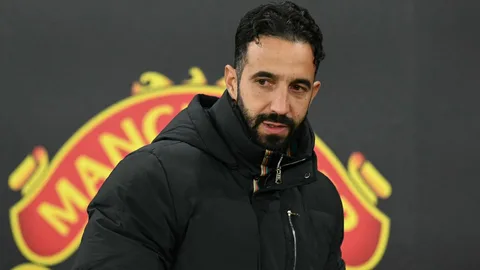
When Manchester United sacked Ruben Amorim, the headline travelled fast. The assumption was followed even faster by poor results, a lost dressing room, and a tactical mismatch. Yet the closer you look, the harder it becomes to sustain the idea that this was purely a football decision. What unfolded points less to the pitch and more to the boardroom, where power, control and long-standing institutional habits continue to shape outcomes at Old Trafford.
This is not another breaking-news retelling. It is an attempt to explain what was really going on, why the fallout mattered more than the scorelines, and why Amorim’s exit fits into a wider Manchester United pattern that has outlived several managers.
A Manager Who Was Never Meant to Be Ordinary
Ruben Amorim did not arrive with the profile of a stopgap. His reputation was built on structure, clarity and authority, three qualities Manchester United have chased for over a decade. He represented a modern managerial archetype, tactically opinionated, demanding alignment from above, and unwilling to operate as a symbolic figurehead.
From the outset, Amorim’s approach contrasted sharply with the club’s traditional power structure. He sought a defined sporting framework, clearer recruitment authority, and protection from constant internal interference. For a club accustomed to managers absorbing institutional contradictions rather than challenging them, this was never going to be a seamless marriage.
While results inevitably shaped public perception, internally the friction ran deeper. Football decisions were no longer isolated from governance disputes, and that distinction matters.
Where the Fallout Began
The board fallout did not erupt overnight. It was the cumulative effect of misaligned expectations, blurred decision-making lines, and unresolved questions about who truly controls Manchester United’s football identity.
Amorim’s philosophy depends on consistency across recruitment, youth integration and tactical continuity. This requires trust and patience from the hierarchy. What emerged instead was a familiar scenario, parallel power centres, competing visions, and slow compromises that satisfied no one.
Board members reportedly grew uneasy with the level of influence Amorim expected. For a club still recalibrating after years of reactive management, his insistence on autonomy was interpreted less as professionalism and more as defiance. This misreading is crucial to understanding why the relationship deteriorated so quickly.
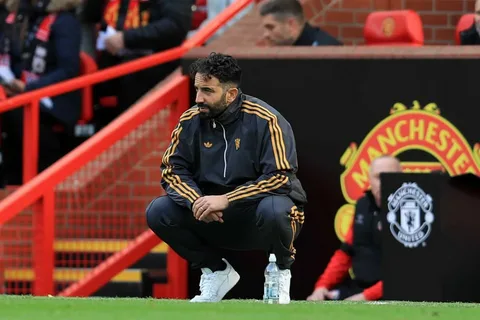
Results Became the Convenient Narrative
Once tension exists at board level, results stop being the cause and start becoming the justification. Manchester United’s performances, whether inconsistent or transitional, offered a convenient public explanation. Yet clubs genuinely committed to long-term rebuilding often ride out such phases.
The decision to sack Amorim suggests the club had already emotionally disengaged from the project. Footballing outcomes simply provided cover for a decision rooted in governance discomfort.
This distinction matters because it reframes the sacking not as a reaction to failure, but as an avoidance of institutional reform.
Manchester United’s Long Memory of Short Leashes
To understand why Amorim’s tenure ended the way it did, it helps to view it through Manchester United’s post-Ferguson history. The club has repeatedly oscillated between embracing modern managerial ideas and retreating into executive caution.
Managers who demand structural clarity tend to clash with a board still negotiating its own identity. Those willing to operate within ambiguity survive longer, often at the expense of coherence on the pitch.
Amorim belonged to the former category. His exit reinforces the idea that Manchester United’s biggest challenge is not tactical innovation, but organisational alignment.
When a club sacks a manager following board fallout, it sends a message beyond the dressing room. It tells future candidates where the balance of power lies. In this case, the message is clear, adaptability to internal politics may matter as much as footballing intelligence.
This has long-term consequences. Elite managers increasingly seek environments where authority is clearly defined. Manchester United’s continued struggles to provide that clarity risk narrowing their future options.
The sacking of Amorim may stabilise short-term narratives, but it also deepens structural uncertainty.
While managers and executives dominate headlines, players often bear the invisible cost. Frequent resets disrupt continuity, undermine confidence and fragment dressing-room identity.
Amorim’s system required discipline and buy-in. Its abrupt termination leaves players once again adjusting to a new voice, new demands and new expectations. Over time, this erodes accountability, as responsibility becomes diffused across transitions.
This cycle has repeated often enough to suggest it is no longer accidental.
What This Says About Manchester United’s Direction
Sacking a manager after a board fallout is not just a football decision; it is a governance statement. It suggests the club is still negotiating who it wants to be: a modern institution or a traditional hierarchy, a progressive project or a controlled spectacle.
Amorim’s departure indicates that the internal debate remains unresolved. Until it is, managerial tenures will continue to feel provisional, regardless of talent or vision.
The issue is not whether Ruben Amorim was flawless. No manager is. The issue is whether Manchester United are structurally prepared for the type of leadership they claim to desire.
Long after match results fade from memory, boardroom decisions shape legacies. This episode will be referenced not for individual games, but as another example of how internal dynamics override football logic at one of the world’s biggest clubs.
In that sense, Manchester United sacking Ruben Amorim is less a shock and more a confirmation. It confirms that the club’s rebuilding challenge is cultural before it is tactical.
Manchester United did not just sack a coach. They closed another chapter in a longer story about control, identity and institutional hesitation. Ruben Amorim’s exit, framed publicly as a football decision, carries the fingerprints of boardroom discomfort.
Until those at the top decide what kind of authority they are willing to share, the cycle will repeat. New managers will arrive with promises. Old patterns will resurface. And the real story will continue to unfold away from the touchline.
That is what was really going on.