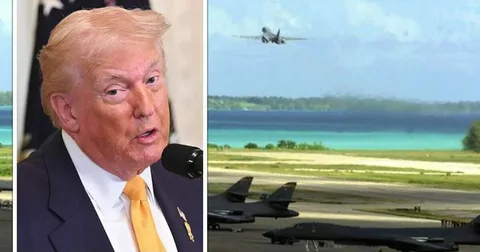
The United Kingdom (UK) has refused a request from the United States to use British-controlled air bases for potential military strikes against Iran, according to officials familiar with discussions between London and Washington. The decision relates to American interest in using facilities including RAF Fairford in Gloucestershire and Diego Garcia in the British Indian Ocean Territory as possible launch points in the event of military action.
Under long-standing bilateral defence agreements, US forces stationed in the UK or at jointly operated facilities cannot carry out offensive operations from British soil without explicit approval from the UK government. While American personnel routinely operate from these bases for training, logistics and defensive missions, any combat use requires prior consent from London.
The request emerged amid heightened tensions between the United States and Iran over Tehran’s nuclear programme and broader regional security issues. The US administration has maintained that it retains military options should diplomatic efforts fail to curb Iran’s nuclear activities. As part of contingency planning, American officials sought confirmation that British facilities could be used if required.
The UK government declined to grant that approval. Officials indicated that legal advice received within government emphasised that any offensive action would need a clear and defensible basis under international law. Without such clarity, authorising the use of British territory for strikes could expose the UK to legal and political consequences.
Prime Minister Sir Keir Starmer’s government has stated consistently that the UK remains committed to its defence partnership with the United States, but that cooperation must align with international legal obligations. British officials have also stressed that the refusal does not alter routine military collaboration, intelligence sharing or joint exercises between the two countries.
RAF Fairford serves as a forward operating base for the United States Air Force and has historically hosted long-range bombers and refuelling aircraft. Diego Garcia, strategically located in the Indian Ocean, has played a key role in past US military operations in the Middle East and South Asia. Despite hosting American forces, both facilities remain under British sovereignty, meaning the UK retains final authority over their operational use.
The issue has drawn attention within diplomatic and defence circles because of the significance of the bases involved. Diego Garcia in particular has been central to US power projection capabilities for decades. Any restriction on its use in a potential conflict scenario carries strategic implications.
The decision also comes at a sensitive time in broader UK foreign policy. The British government has been balancing its strong alliance with Washington against its stated commitment to upholding international law and multilateral approaches to conflict resolution. British officials have emphasised diplomacy, sanctions and international monitoring as primary tools for addressing concerns about Iran’s nuclear ambitions.
In Washington, the request formed part of contingency discussions rather than confirmation of imminent military action. US officials have reiterated that no final decision has been made regarding strikes on Iran, and that diplomatic channels remain active. Nonetheless, maintaining access to allied bases is considered an important element of operational flexibility.
The refusal has prompted debate about the limits of the UK-US “special relationship”. Historically, the two countries have coordinated closely on major military operations, including in Iraq and Afghanistan. However, there have been instances where legal or political considerations have shaped British participation or support.
Defence analysts note that under the United Nations Charter, the use of force is permitted only in cases of self-defence or with Security Council authorisation. The UK government’s caution reflects the need to ensure any action supported from British territory would meet those criteria. Without such justification, the government could face domestic legal challenges or international criticism.
The development also intersects with ongoing discussions over the future status of the Chagos Islands, which include Diego Garcia. The UK has been engaged in negotiations with Mauritius regarding sovereignty arrangements, while seeking to maintain long-term security cooperation with the United States. Although the base remains operational under existing agreements, its strategic role continues to attract political scrutiny.
Within Parliament, some members have welcomed the government’s decision, arguing that it demonstrates independence and adherence to international law. Others have questioned whether limiting operational flexibility could weaken deterrence or strain relations with a key ally.
The United States and the United Kingdom continue to coordinate closely on Iran policy, including through sanctions regimes and intelligence cooperation. Both governments have expressed concern about Iran’s uranium enrichment levels and regional activities. However, the UK has indicated that military escalation would require careful legal and diplomatic assessment.
At present, there is no confirmation of any imminent strike against Iran. The discussions regarding base access form part of broader contingency planning that governments routinely conduct during periods of tension. The UK’s refusal therefore reflects a position on potential use rather than a response to a specific operational order.
Officials from both countries are expected to continue consultations on defence cooperation. While differences over specific permissions can arise, the overall framework of military partnership remains intact. The episode nevertheless highlights how alliance coordination can be shaped by domestic legal standards and political calculations.
As tensions in the Middle East continue to fluctuate, access to overseas bases will remain a key factor in strategic planning. The UK’s stance underscores that even among close allies, decisions about the use of national territory for military operations remain sovereign choices, governed by law, policy and political judgement.